

Container Loading Supervision in Mexico: Complete Loading Inspection Guide
Container loading supervision in Mexico is an independent inspection conducted during the container loading process to verify that the correct products, quantities, packaging, and loading methods meet buyer requirements before goods are transported or exported.
Mexico has become one of the world’s leading manufacturing and export centers, supplying products to North America, Europe, Latin America, and other global markets. Industries including automotive, electronics, furniture, home appliances, consumer goods, medical devices, and industrial equipment rely heavily on Mexico’s extensive manufacturing network and logistics infrastructure.
Although products may successfully pass factory inspections before shipment, quality risks can still arise during the final loading stage. Incorrect quantities, damaged packaging, unsuitable containers, poor cargo distribution, and inadequate load securing can all result in transportation damage, shipment shortages, and costly customer claims.
Container loading supervision provides an additional layer of quality assurance by independently verifying that products are loaded correctly and that the shipment is ready for safe transportation.
Why Container Loading Supervision is Important in Mexico
Mexico’s strategic location and strong manufacturing sector make it one of the largest exporters in the Americas. Every day, thousands of containers leave factories and warehouses for domestic distribution, cross-border trucking, rail transport, and international shipping.
Many export shipments travel through major logistics hubs such as:
- Manzanillo
- Veracruz
- Lázaro Cárdenas
- Altamira
- Ensenada
Products often move through several transportation stages before reaching their final destination. A shipment may travel from the factory to a consolidation warehouse, then to a port or border crossing before continuing by sea, rail, or truck.
Each transfer increases the possibility of loading mistakes, packaging damage, cargo movement, or quantity discrepancies.
Container loading supervision helps identify these issues before the container is sealed, reducing the likelihood of costly problems later in the supply chain.
Mexico’s Manufacturing and Export Industries
Mexico exports a wide range of manufactured products to global markets.
Industries that frequently use container loading supervision include:
- Automotive components
- Consumer electronics
- Furniture
- Home appliances
- Medical devices
- Textiles and apparel
- Promotional products
- Plastic products
- Industrial equipment
- Packaging materials
Many of these products travel long distances before reaching customers. Proper loading methods are essential to protect goods throughout transportation and maintain product quality upon arrival.
Common Shipping Risks in Mexico
Even when products meet quality requirements before shipment, problems can occur during loading and transportation.
Understanding these risks allows businesses to implement appropriate quality control measures before containers leave the factory.
Long-Distance Inland Transportation
Many manufacturing facilities are located hundreds of kilometers from Mexico’s major ports and border crossings.
Containers may travel by truck or rail for long distances before export.
Poor loading practices can increase the risk of:
- Carton collapse
- Cargo movement
- Product breakage
- Packaging damage
Proper cargo distribution helps minimize these transportation risks.
Cross-Border Shipments
Mexico exports a significant volume of products to the United States and Canada.
Cross-border logistics often involve multiple inspections, transfers, and handling activities before products reach their final destination.
Incorrect loading, unstable pallets, or damaged packaging can create additional complications during transportation and increase the likelihood of receiving disputes.
Multiple Cargo Handling Stages
Export shipments may be handled several times before arriving at the customer.
Products are commonly transferred between:
- Factory warehouses
- Distribution centers
- Freight forwarders
- Inland transportation
- Ports
- Shipping terminals
Each handling stage increases the possibility of packaging damage or product movement if cargo is not properly secured.
Container Condition Problems
The condition of the shipping container directly affects cargo safety.
Before loading begins, inspectors commonly check for:
- Water leaks
- Rust
- Structural damage
- Dirty container interiors
- Excessive odors
- Damaged flooring
- Door sealing problems
Using a damaged container can expose products to moisture, contamination, or physical damage during transportation.
Loading Errors
Loading mistakes remain one of the most common causes of shipment disputes.
Typical issues include:
- Incorrect quantities
- Wrong SKUs
- Mixed products
- Missing cartons
- Incorrect carton labels
- Poor weight distribution
Independent supervision helps verify that products are loaded according to shipping instructions before the container is sealed.
What Does a Container Loading Inspector Check?
Container loading supervision involves much more than observing products being loaded into a container.
Inspectors verify the condition of the shipment, monitor loading activities, and confirm that cargo is prepared for transportation according to buyer requirements.
Product Verification
Before loading begins, inspectors verify that the shipment matches the approved documentation.
Typical checks include:
- Product identification
- SKU verification
- Quantity confirmation
- Carton counts
- Visual product condition
- Carton marking accuracy
Verifying products before loading helps prevent shipment errors and ensures the correct goods are dispatched.
Packaging Inspection
Packaging plays an important role in protecting products during transportation.
Inspectors evaluate whether packaging is suitable for handling, stacking, and long-distance shipping.
Packaging checks commonly include:
- Carton condition
- Pallet stability
- Stretch wrapping quality
- Protective materials
- Shipping labels
- Warning labels
- Carton sealing
Damaged or poorly constructed packaging may increase the risk of transportation damage even when the products themselves are free from defects.
Container Condition Inspection
Before cargo is loaded, inspectors assess whether the shipping container is suitable for transportation.
Inspection items typically include:
- Interior cleanliness
- Dry condition
- Structural integrity
- Floor condition
- Door operation
- Signs of water penetration
- Container identification
Only containers in suitable condition should be used for export shipments.
Cargo Loading Observation
During loading, inspectors monitor the entire loading process to verify that cargo is handled safely and according to the buyer’s loading instructions.
Areas commonly observed include:
- Product handling methods
- Carton stacking
- Weight distribution
- Placement of fragile products
- Loading sequence
- Space utilization inside the container
Proper loading practices help reduce cargo movement during transportation and improve overall shipment stability.
Cargo Securing Verification
Even when products are loaded correctly, insufficient cargo securing can result in damage during transportation.
Inspectors verify whether appropriate stabilization methods have been used, including:
- Strapping
- Bracing
- Blocking
- Dunnage
- Air bags or inflatable cushions
- Corner protection materials
Proper cargo securing minimizes product movement during truck, rail, and ocean transportation.
Container Sealing and Final Verification
Once loading has been completed, inspectors perform a final verification before the container is sealed.
The final inspection generally includes:
- Recording the container number
- Recording the seal number
- Verifying loading completion
- Confirming carton quantities
- Taking final loading photographs
- Documenting any observations
The inspection report provides buyers with independent evidence of the shipment’s condition before transportation begins.
Container Loading Supervision Process in Mexico
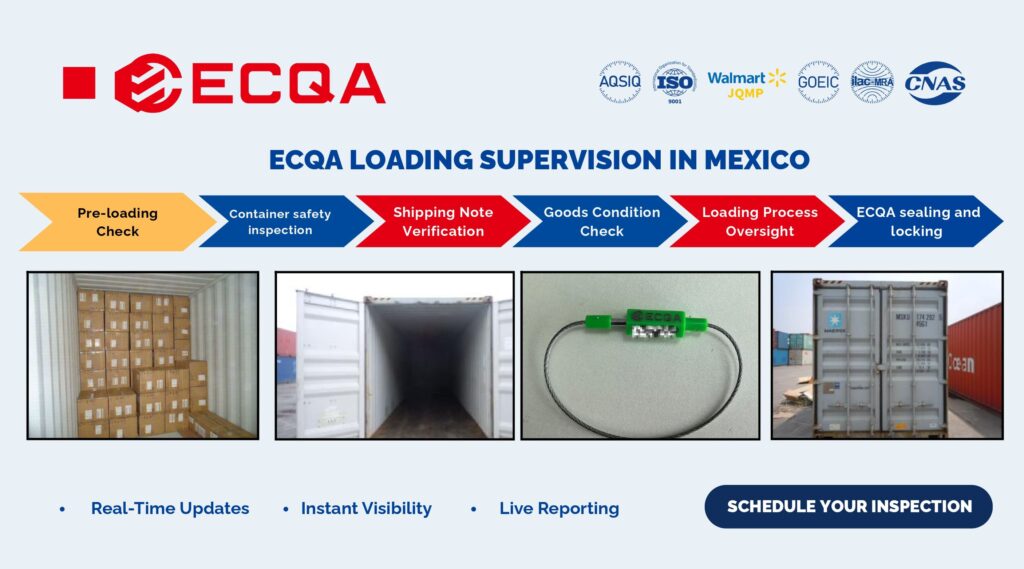
Container loading supervision follows a structured inspection process that provides buyers with visibility during the final stage of shipment preparation.
Step 1: Review Shipment Documentation
Before loading begins, inspectors review the relevant shipping documentation to understand the shipment requirements.
This may include:
- Purchase orders
- Packing lists
- Shipping instructions
- Product specifications
- Loading instructions
Reviewing documentation ensures the inspection follows the buyer’s approved shipment requirements.
Step 2: Inspect the Shipping Container
The container is inspected before loading to determine whether it is suitable for transportation.
Inspectors verify:
- Interior cleanliness
- Dry condition
- Structural integrity
- Floor condition
- Door functionality
- Water leakage
- Rust or contamination
Only containers in acceptable condition should be used for export shipments.
Step 3: Verify Products Before Loading
Before products enter the container, inspectors confirm that the shipment matches the approved documentation.
Verification activities typically include:
- Product identification
- Quantity confirmation
- SKU verification
- Carton counts
- Packaging condition
- Shipping marks
This step helps prevent loading the wrong products or incorrect shipment quantities.
Step 4: Monitor the Loading Process
Inspectors observe the loading operation to verify that products are handled correctly throughout the process.
Areas monitored include:
- Loading sequence
- Carton stacking
- Weight distribution
- Placement of heavy and fragile items
- Cargo handling methods
Continuous observation helps identify loading errors before the container is sealed.
Step 5: Verify Cargo Securing
After loading is complete, inspectors evaluate whether cargo has been properly stabilized.
Typical verification includes:
- Blocking and bracing
- Strapping
- Dunnage placement
- Air bag installation
- Empty space management
Proper stabilization reduces the likelihood of cargo shifting during transportation.
Step 6: Issue the Inspection Report
Following completion of the inspection, a detailed report is prepared.
The report commonly includes:
- Inspection summary
- Quantity verification
- Container condition
- Loading photographs
- Seal number
- Cargo securing observations
- Inspection findings
This documentation provides buyers with independent confirmation that the shipment was loaded according to the agreed requirements.
Benefits of Third-Party Container Loading Supervision
Independent container loading supervision helps reduce shipping risks while improving visibility across the supply chain.
Improves Shipment Accuracy
Independent verification helps confirm that the correct products, quantities, and packaging are loaded before shipment.
Reduces Transportation Damage
Proper cargo loading and stabilization help minimize:
- Product breakage
- Carton collapse
- Cargo movement
- Packaging damage
Increases Supply Chain Visibility
Detailed inspection reports provide buyers with objective information regarding loading conditions before products leave the factory or warehouse.
Supports Claims and Dispute Resolution
Photographs, inspection records, and seal verification provide valuable evidence if shipment disputes occur during transportation.
Strengthens Customer Confidence
Receiving products in the expected condition helps reduce customer complaints, product returns, and replacement costs.
Why Choose ECQA for Container Loading Supervision in Mexico?
ECQA provides independent Container Loading Supervision (CLS) services throughout Mexico, helping manufacturers, exporters, and international buyers reduce shipping risks before cargo leaves the factory or warehouse.
Our services include:
- Product quantity verification
- SKU verification
- Packaging inspection
- Container condition inspection
- Cargo loading supervision
- Cargo securing verification
- Container seal verification
- Detailed inspection reports with photographic evidence
Our inspectors support businesses across Mexico’s major manufacturing regions and logistics hubs. With standardized inspection procedures, fast reporting, and real-time communication, ECQA helps businesses gain greater confidence that shipments are loaded accurately and prepared for safe transportation.
Container loading supervision in Mexico provides an important final verification before products begin their journey to domestic or international markets. By confirming shipment accuracy, inspecting container conditions, monitoring loading practices, and verifying cargo securing, businesses can reduce transportation risks, improve shipment accuracy, and strengthen supply chain reliability. Independent loading supervision helps ensure that products leave the factory in the correct condition, providing greater confidence before cargo reaches its final destination.

 Request Free Sample Report