

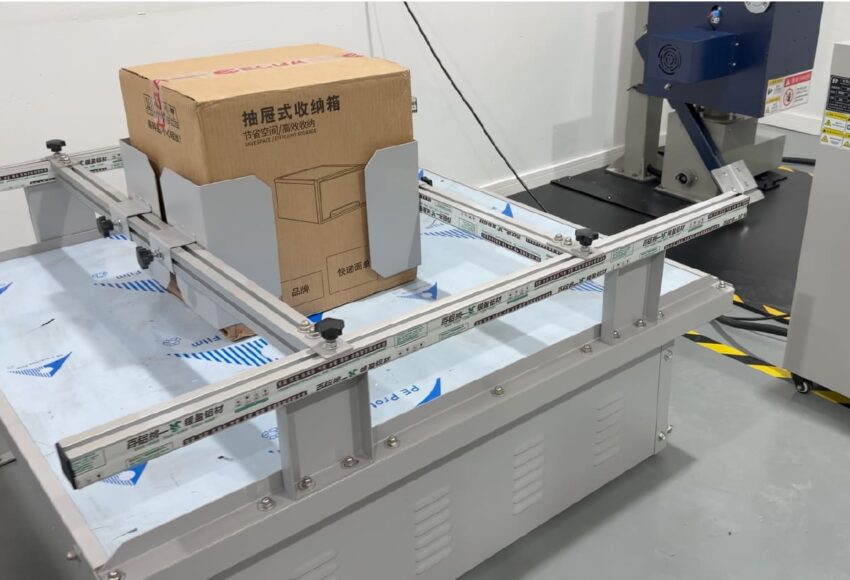
ISTA 1A Testing: Procedure, Requirements and Packaging Test Certificate
ISTA 1A testing is a non-simulation integrity test for individual packaged products weighing 150 lb (68 kg) or less. The procedure evaluates the ability of a product and its packaging to withstand defined vibration and shock tests before distribution.
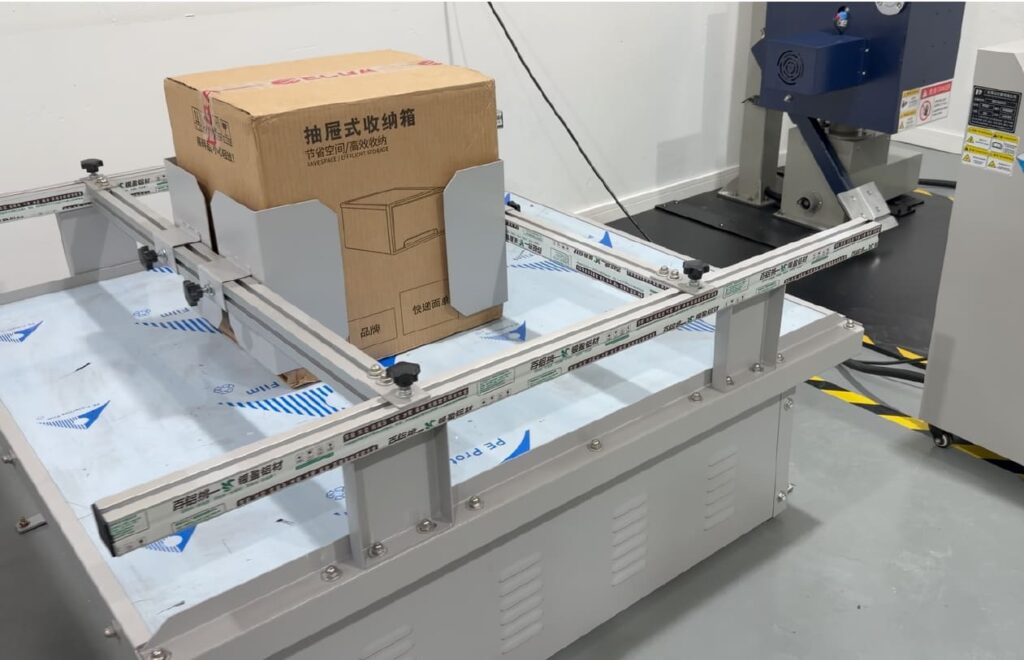
ISTA classifies Procedure 1A within its 1 Series Non-Simulation Integrity Performance Tests. These tests challenge the strength and robustness of the packaged product and are commonly used as screening tests during packaging development and evaluation. They are not designed to reproduce a specific transportation environment.
The product and packaging are tested as a complete system. This includes the product, outer carton, cushioning, inserts, closures, internal supports, and other components that may affect packaging performance.
What is ISTA 1A Testing?
ISTA 1A is formally used for integrity testing of packaged products weighing 150 lb (68 kg) or less.
It can be used to evaluate the performance of a packaged product or compare different product and package design alternatives under consistent laboratory conditions.
Typical applications include:
- Evaluating a new packaging design
- Comparing alternative cartons or cushioning systems
- Identifying weaknesses before shipment
- Investigating packaging performance problems
- Evaluating changes to a product or package
- Establishing a repeatable packaging performance benchmark
ISTA 1A considers the package and product together. A carton that remains intact does not necessarily indicate satisfactory performance if the product inside is damaged. Likewise, some visible package deformation may be acceptable if it remains within the pre-established package degradation criteria.
The acceptance criteria therefore need to be defined before testing begins.
What Products Are Covered by ISTA 1A?
ISTA 1A applies to individual packaged products weighing 150 lb (68 kg) or less when prepared for shipment.
The weight limit refers to the complete packaged product, including the product and packaging.
Examples may include packaged:
- Consumer electronics
- Small appliances
- Toys
- Household products
- Kitchenware
- Hardware
- Automotive components
- Personal care products
- Retail goods
- Industrial components
Weight alone does not determine whether ISTA 1A is the correct procedure.
The intended distribution environment and testing objective also need to be considered. For example, a packaged product moving through a parcel delivery system may require a general simulation procedure such as ISTA 3A when evaluation against parcel-distribution hazards is required.
ISTA 1A is therefore best understood as an integrity screening procedure, rather than a simulation of a particular shipping route or carrier network.
What Does ISTA 1A Test?
The core ISTA 1A procedure challenges the packaged product through defined vibration and shock testing, together with required preconditioning.
The principal test sequence includes:
- Atmospheric preconditioning
- Fixed-displacement vibration
- Shock testing
The exact testing must follow the current applicable version of the ISTA 1A procedure.
Atmospheric Preconditioning
Before the mechanical tests, the packaged product undergoes required preconditioning at laboratory ambient temperature and humidity.
ISTA added a required 12-hour laboratory ambient preconditioning sequence to its 1-Series procedures.
This step allows the packaged product to reach the laboratory environment before vibration and shock testing begins.
It is important to distinguish this preconditioning from more extensive controlled atmospheric conditioning used in certain other ISTA procedures.
ISTA 1A does not use an environmental chamber as a required test equipment category in the current ISTA equipment overview.
Fixed-Displacement Vibration Testing
Vibration testing evaluates how the packaged product responds to repeated mechanical movement.
ISTA 1A uses fixed-displacement vibration as its required vibration method. The purpose is to challenge the integrity of the product and package combination under a repeatable vibration condition.
During vibration, packaging weaknesses may become visible through:
- Product movement
- Cushioning displacement
- Abrasion
- Loosening of components
- Closure problems
- Carton fatigue
- Contact between the product and packaging
- Damage to internal supports
The package should be evaluated as a complete system because movement inside the carton can cause damage even when the exterior appears largely unaffected.
ISTA lists fixed-displacement vibration equipment as required for Procedure 1A. Random vibration equipment is shown as an alternative in its current equipment overview.
Where random vibration is specifically required as the basis of the integrity procedure, ISTA 1G is the corresponding 1-Series procedure for packaged products weighing 150 lb (68 kg) or less.
Shock Testing
Shock testing evaluates the packaged product’s ability to tolerate impacts associated with handling.
Depending on the package and applicable test method, ISTA’s equipment requirements identify several shock methods associated with Procedure 1A. Drop testing is the required method, with incline impact, horizontal impact, or vertical shock identified as alternatives.
Shock testing can reveal problems such as:
- Insufficient cushioning
- Corner or edge weakness
- Internal component movement
- Product breakage
- Closure failure
- Insert displacement
- Damage caused by excessive clearance inside the package
The applicable impact method, test level, package orientation, and sequence should follow the current ISTA 1A procedure.
Does ISTA 1A Include a Compression Test?
Compression testing is not part of the basic ISTA 1A test sequence.
This distinction is important because transportation packaging tests are sometimes described broadly as combinations of vibration, drop, and compression testing.
ISTA’s current required-equipment table identifies no static or machine compression requirement for Procedure 1A.
Where minimum compression performance needs to be evaluated within the 1-Series framework, ISTA identifies Procedure 1C as an extended integrity test for individual packaged products weighing 150 lb (68 kg) or less. The official 1A overview specifically directs users toward 1C where a minimum compression value should be tested.
Separate carton or package compression testing may also be conducted when required by a product specification, packaging requirement, customer requirement, or another applicable test method.
How is an ISTA 1A Test Conducted?
ISTA 1A testing begins before the package is placed on the test equipment. The packaged-product configuration and acceptance criteria first need to be established.
1. Identify the Packaged Product
The test sample should represent the packaged product intended for distribution.
Relevant information includes:
- Product description
- Product weight
- Packaged-product weight
- Package dimensions
- Outer packaging
- Cushioning system
- Internal supports and inserts
- Closure method
- Packing configuration
Changes to these elements can affect test performance.
2. Establish Product Damage and Package Degradation Criteria
ISTA requires the shipper to determine what constitutes product damage and what level of damage, if any, is allowable.
The shipper also needs to establish the methodology used to determine product condition after testing and the acceptable condition of the package.
This is essential because ISTA 1A does not provide one universal definition of acceptable damage for every product.
For example, acceptance criteria may address:
- Product functionality
- Cracking or breakage
- Cosmetic damage
- Permanent deformation
- Component displacement
- Carton damage
- Closure integrity
- Cushioning condition
A small dent in a shipping carton may be acceptable for one product but unacceptable where the carton is also the retail presentation package.
3. Prepare the Test Sample
The test sample should use the actual product and package wherever possible.
The carton, cushioning, inserts, closures, protective materials, and packing arrangement should correspond with the configuration being evaluated.
Substituting different materials can affect the relevance of the result.
4. Perform the Required Preconditioning
The packaged product undergoes the required laboratory ambient preconditioning before mechanical testing.
5. Conduct Vibration Testing
The packaged product is subjected to the vibration test specified by the procedure.
During and after testing, relevant movement, package deterioration, and product condition can be observed and documented.
6. Conduct Shock Testing
The applicable shock test is then performed according to the procedure.
The required method depends on the packaged product and applicable test conditions.
7. Examine the Product and Package
After completion of the test sequence, the product and package are examined against the acceptance criteria established before testing.
The evaluation should document both product condition and package condition.
How Many Samples Are Required for ISTA 1A?
ISTA 1A requires one sample to complete the procedure.
However, a single successful test should be interpreted carefully when evaluating broader production performance.
ISTA recommends replicate testing with new samples when a more representative assessment of packaged-product performance is required. The 1-Series guidance has historically recommended testing five or more samples where practical to improve confidence in representative performance.
Each replicate should use a new packaged-product sample because previous vibration or impact exposure can change the condition of the package and product.
The number of samples used for a commercial testing program can therefore depend on the purpose of testing, customer requirements, available samples, and the level of confidence required.
ISTA 1A Test Equipment
The equipment used for ISTA 1A depends on the required test elements and applicable shock method.
Typical equipment includes:
Vibration equipment capable of performing the required fixed-displacement vibration test.
Drop test equipment for controlled shock testing of packages within the equipment’s operating range.
Alternative shock equipment may be applicable where the procedure permits an incline impact, horizontal impact, or vertical shock method.
Measurement equipment is also used to establish packaged-product dimensions, weight, and other relevant test information.
Equipment should be suitable for the package size, weight, and required test conditions.
How Are ISTA 1A Test Results Evaluated?
ISTA 1A results are evaluated against the product damage tolerance and package degradation allowance established before testing.
A complete evaluation considers whether:
- The required test sequence was completed
- The product remained functional where functionality is relevant
- Physical product damage remained within the defined tolerance
- Cosmetic condition met the established criteria
- Packaging degradation remained acceptable
- Closures remained effective
- Cushioning and internal supports continued to perform their intended function
The result should not be based solely on whether the outer carton still looks acceptable.
A package may appear relatively undamaged while the product has suffered internal or functional damage. The reverse can also occur, where visible carton deformation does not result in unacceptable product damage.
What Is an ISTA 1A Test Report or Certificate?
After testing, the laboratory can document the packaged product, test method, test conditions, observations, and results in an ISTA 1A test report.
Depending on the testing program and documentation required, the laboratory documentation may identify:
- Applicant or client information
- Product identification
- Sample description
- Package dimensions and weight
- Packaging configuration
- Test procedure
- Test equipment
- Test conditions
- Test sequence
- Product and package observations
- Photographs
- Acceptance criteria
- Test results
Where an ISTA 1A packaging test certificate is requested, the document should clearly identify the packaged product tested, the applicable test procedure, and the reported result.
A laboratory-issued test report or certificate should not be confused with a statement that ISTA itself has certified the packaged product. Any ISTA certification, laboratory certification, or package certification claim should follow the applicable ISTA program and eligibility requirements.
What Can Cause a Package to Fail ISTA 1A Testing?
Poor performance during ISTA 1A testing can come from the product, packaging, or interaction between the two.
Insufficient Cushioning
Cushioning may be too thin, too rigid, too soft, incorrectly positioned, or unsuitable for the weight and fragility of the product.
This can allow excessive shock to reach the product during impact testing.
Excessive Movement Inside the Package
Unused space can allow the product to move repeatedly during vibration.
Movement can cause abrasion, collision between components, damage to accessories, and impacts against the carton or internal packaging.
Weak Carton Construction
Carton panels, corners, seams, or closures may deteriorate during vibration and handling.
The appropriate carton construction depends on the product and complete packaging system.
Poor Internal Supports
Trays, dividers, foam inserts, molded pulp, and other internal components need to retain the product throughout testing.
If they shift, collapse, or fracture, the product may lose protection even when the outer carton remains closed.
Closure Failure
Tape, adhesive, staples, straps, or other closure methods may loosen or fail during testing.
Closure performance can be affected by carton surface condition, application method, material selection, and packaging design.
Product Weakness
ISTA testing evaluates the packaged product, so failure does not always mean the carton itself is inadequate.
A fragile component, loose assembly, insufficient product restraint, or product design issue can contribute to damage during vibration or shock.
ISTA 1A vs ISTA 1G
ISTA 1A and ISTA 1G both apply to individual packaged products weighing 150 lb (68 kg) or less, but they use different vibration approaches.
| Requirement | ISTA 1A | ISTA 1G |
| Test category | Non-simulation integrity | Non-simulation integrity |
| Weight | ≤150 lb (68 kg) | ≤150 lb (68 kg) |
| Primary vibration approach | Fixed-displacement vibration | Random vibration |
| Main purpose | Integrity screening | Integrity screening using random vibration |
ISTA specifically points users toward Procedure 1G when random vibration is desired in place of the fixed-displacement vibration approach used in 1A.
The procedures should therefore not be treated as interchangeable simply because their packaged-product weight ranges are the same.
ISTA 1A vs ISTA 2A
Both ISTA 1A and 2A apply to individual packaged products weighing 150 lb (68 kg) or less, but they belong to different test categories.
ISTA 1A is a Non-Simulation Integrity Performance Test. It provides a basic screening method for challenging the strength and robustness of the packaged product.
ISTA 2A is a Partial Simulation Performance Test. ISTA’s 2-Series procedures combine basic elements associated with 1-Series integrity testing with at least one element associated with 3-Series general simulation testing.
ISTA 2A may therefore be appropriate where the testing objective requires a more extensive evaluation than the basic 1A integrity screening procedure.
ISTA 1A vs ISTA 3A
ISTA 1A and ISTA 3A serve substantially different purposes.
| Requirement | ISTA 1A | ISTA 3A |
| Category | Non-simulation integrity | General simulation |
| Weight | ≤150 lb (68 kg) | ≤150 lb (70 kg) |
| Application | General integrity screening | Parcel delivery system shipments |
| Distribution simulation | No | Yes, parcel distribution environment |
| Vibration approach | Fixed-displacement | Random vibration |
The 68 kg and 70 kg values are intentionally different in ISTA’s published procedure descriptions and should not be standardized to one metric conversion. ISTA currently lists 1A as 150 lb (68 kg) or less and 3A as 150 lb (70 kg) or less.
ISTA 3A applies specifically to individual packaged products moving through parcel delivery systems and accommodates standard, small, flat, and elongated package types.
Where the objective is simply early-stage integrity screening, 1A may be appropriate. Where the objective is evaluation against a parcel delivery environment, 3A should be considered.
Is ISTA 1A a Transportation Simulation Test?
ISTA 1A should not be described as a transportation simulation test.
It is classified as a Non-Simulation Integrity Performance Test.
The procedure challenges the packaged product using defined laboratory tests, but ISTA explicitly states that 1-Series procedures are not designed to simulate actual transport hazards.
This distinction matters when selecting a test.
Passing ISTA 1A provides information about performance under the defined 1A test conditions. It does not establish that the package will withstand every possible condition encountered during actual distribution.
Does Passing ISTA 1A Guarantee No Shipping Damage?
No.
Transportation damage can be influenced by distribution conditions that are outside the scope of Procedure 1A.
ISTA’s own 1A overview notes that some transit conditions, including moisture, pressure, and unusual handling, may not be covered.
Actual shipments can also experience different impact severities, vibration environments, stacking conditions, climatic exposure, handling methods, and distribution routes.
ISTA 1A is therefore used as a controlled packaged-product integrity test, with results interpreted within the scope and limitations of the procedure.
When Should ISTA 1A Testing Be Repeated?
An ISTA 1A result relates to the packaged-product configuration that was tested.
Retesting should be considered when changes may affect packaging performance, including changes to:
- Product dimensions
- Product weight
- Product design
- Outer carton
- Corrugated board specification
- Cushioning material
- Cushioning thickness
- Internal inserts or supports
- Closure system
- Packing arrangement
- Quantity packed
- Manufacturing process
- Packaging process
Even a seemingly small change can alter how shock or vibration is transmitted through the packaged product.
The current version of the applicable ISTA procedure should also be confirmed when arranging new testing.
ISTA 1A Testing and Packaging Inspection
ISTA 1A testing and packaging inspection address different aspects of packaging quality.
Packaging inspection checks whether production packaging conforms to specified requirements. This can include carton dimensions, labels, barcodes, shipping marks, cushioning placement, packing quantities, closures, and palletization.
ISTA 1A evaluates the performance of the packaged product under a defined laboratory integrity test procedure.
A carton can meet its dimensional, labeling, and packing specifications during inspection while still performing poorly during vibration or shock testing.
Where broader transportation packaging evaluation is required, the ISTA packaging testing guide explains the differences between the major ISTA test series and procedures.
ISTA 1A testing should be performed on a representative packaged product with clearly defined product damage and package degradation criteria. Confirm that Procedure 1A matches the packaged-product weight, test objective, and distribution requirements before testing, then use the resulting report to evaluate whether the current packaging configuration meets the established performance criteria.
Book ISTA 1A Testing in China
ECQA provides ISTA 1A testing in China for individual packaged products weighing 150 lb (68 kg) or less. Testing covers the applicable vibration and shock tests under the ISTA 1A procedure, with test results documented in a report.
To book ISTA 1A testing, provide the packaged-product details, dimensions, weight, and testing requirements so the test scope can be confirmed before sending samples to the laboratory.
Frequently Asked Questions About ISTA 1A Testing
What is the weight limit for ISTA 1A?
ISTA 1A applies to individual packaged products weighing 150 lb (68 kg) or less.
Is ISTA 1A a drop test?
ISTA 1A includes shock testing, with drop testing identified as the required shock equipment method and certain alternative impact methods available as applicable. It also includes vibration testing and required preconditioning, so the complete procedure should not be described simply as a drop test.
Does ISTA 1A include vibration testing?
Yes. Fixed-displacement vibration is a required test element in ISTA 1A. ISTA 1G is available where random vibration is used as the basis of the corresponding 1-Series integrity test for packages weighing 150 lb (68 kg) or less.
Does ISTA 1A include compression testing?
No. Compression testing is not part of the basic ISTA 1A test sequence. Where minimum compression performance needs to be included within an extended 1-Series integrity test for packages weighing 150 lb (68 kg) or less, ISTA identifies Procedure 1C.
How many samples are required for ISTA 1A?
One sample is required to perform the procedure. Replicate testing with new samples can provide a more representative assessment of packaged-product performance.
Is ISTA 1A the same as ISTA 3A?
No. ISTA 1A is a non-simulation integrity test for packaged products weighing 150 lb (68 kg) or less. ISTA 3A is a general simulation test for parcel delivery system shipments weighing 150 lb (70 kg) or less.
Does an ISTA 1A pass guarantee that a package will survive transportation?
No. ISTA 1A evaluates performance under defined laboratory conditions and does not simulate every transportation hazard or distribution environment.

 Request Free Sample Report