

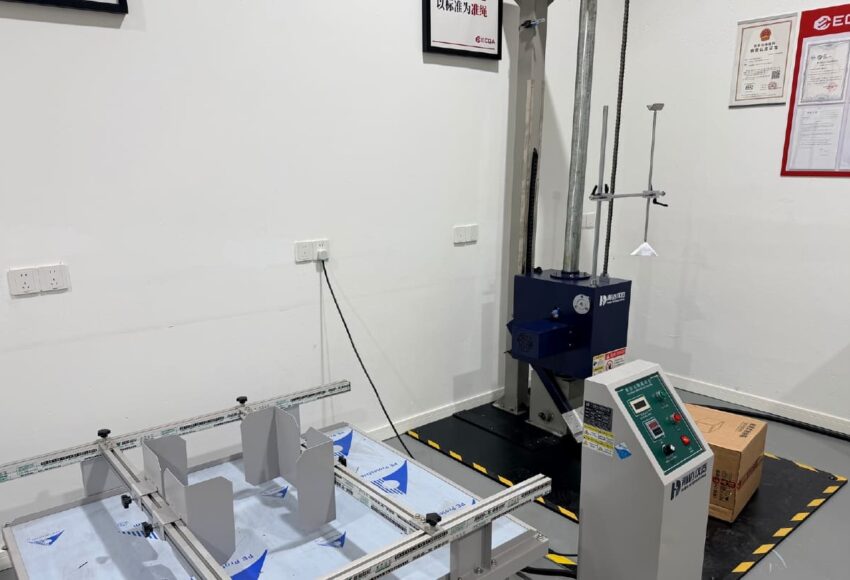
ISTA Packaging Testing: Test Procedures, Standards and Requirements
ISTA packaging testing evaluates how a packaged product performs when subjected to defined transportation and distribution test conditions. The procedures are developed by the International Safe Transit Association (ISTA) and are used to assess the performance of the product and packaging system together.
Depending on the selected ISTA procedure, testing may involve vibration, shock, compression, atmospheric conditioning, or other defined test elements. The required sequence and test conditions vary because different procedures address different packaged-product characteristics and distribution environments.
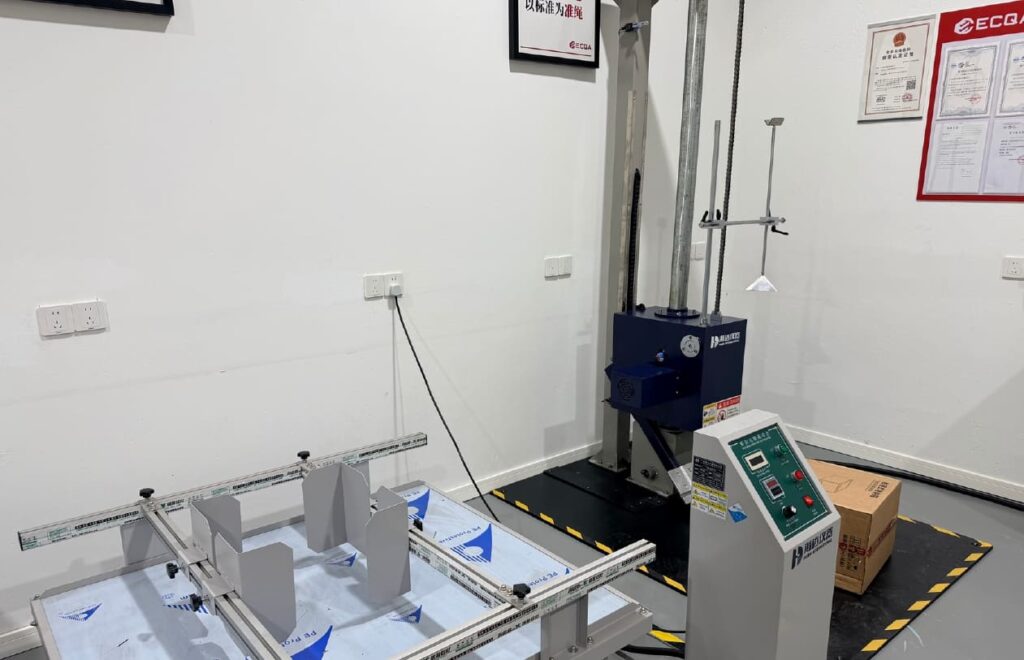
ISTA organizes its procedures into several test series. The 1 Series provides non-simulation integrity testing, the 2 Series provides partial simulation testing, and the 3 Series provides general simulation testing. Selecting the appropriate procedure therefore begins with understanding the packaged product and how it will be handled and transported.
What Is ISTA Packaging Testing?
ISTA packaging testing is a structured method for evaluating whether a packaged product can withstand specified hazards associated with handling and distribution.
The packaged product is evaluated as a complete system. This means the performance of the outer carton cannot be considered independently from the product, cushioning, inserts, closures, internal supports, and other packaging components.
ISTA testing can be used during:
- Packaging development
- Packaging comparison
- Product and package evaluation
- Distribution testing
- Packaging design changes
- Quality assurance programs
- Investigation of transportation damage
The purpose of the test also affects which procedure should be selected.
Some ISTA procedures are primarily designed as screening tools for package development. Others incorporate test conditions intended to provide a closer simulation of particular distribution environments.
ISTA Test Series Explained
ISTA procedures are organized according to the type and level of performance testing they provide.
| ISTA Series | Test Type | General Purpose |
| 1 Series | Non-Simulation Integrity Performance Tests | Screening the strength and robustness of the packaged product |
| 2 Series | Partial Simulation Performance Tests | Combining integrity testing with selected simulation elements |
| 3 Series | General Simulation Performance Tests | Evaluating packaged products against hazards associated with defined distribution environments |
| 6 Series | Member Performance Tests | Procedures developed for particular ISTA member distribution systems |
The series alone does not determine the correct test. The individual procedure must also match the packaged product, weight, package configuration, and distribution method.
ISTA 1 Series: Non-Simulation Integrity Tests
The ISTA 1 Series challenges the strength and robustness of the product and package combination.
These procedures are not designed to simulate actual transportation environments. They are primarily useful as screening tests and as consistent benchmarks when comparing packaging designs or monitoring performance over time.
Current 1-Series procedures include:
- ISTA 1A – Packaged products weighing 150 lb (68 kg) or less
- ISTA 1B – Packaged products weighing over 150 lb (68 kg)
- ISTA 1C – Extended testing for individual packaged products weighing 150 lb (68 kg) or less
- ISTA 1D – Extended testing for individual packaged products weighing over 150 lb (68 kg)
- ISTA 1E – Unitized loads
- ISTA 1G – Random vibration testing for packaged products weighing 150 lb (68 kg) or less
- ISTA 1H – Random vibration testing for packaged products weighing over 150 lb (68 kg)
ISTA 1A is particularly useful as an initial screening procedure during packaging development. It applies to individual packaged products weighing 150 lb (68 kg) or less.
The specific test elements vary between 1-Series procedures, so vibration, shock, compression, and other tests should not be assumed to apply to every procedure.
ISTA 2 Series: Partial Simulation Tests
The ISTA 2 Series combines elements of non-simulation integrity testing with at least one element associated with general simulation testing.
This provides a greater level of distribution-related simulation than the 1 Series while retaining basic integrity test elements.
Current procedures include:
- ISTA 2A – Packaged products weighing 150 lb (68 kg) or less
- ISTA 2B – Packaged products weighing over 150 lb (68 kg)
- ISTA 2C – Furniture packages
ISTA 2A and 2B are differentiated primarily by packaged-product weight. ISTA 2C is specifically intended for individual packaged furniture products transported in a container.
ISTA 3 Series: General Simulation Tests
The ISTA 3 Series consists of general simulation performance tests.
These procedures are designed around transportation hazards associated with particular distribution environments. Depending on the procedure, testing may address conditions such as vibration, shock, compression, handling, and atmospheric exposure.
Examples include:
- ISTA 3A – Parcel delivery system shipments weighing 150 lb (70 kg) or less
- ISTA 3B – Less-than-truckload (LTL) shipments
- ISTA 3E – Unitized loads
- ISTA 3L – E-commerce retailer fulfillment systems
- ISTA Project 3K – Fast-moving consumer goods in the European retail supply chain
- ISTA Project 3L – Generalized e-commerce retailer fulfillment
ISTA also maintains additional 3-Series procedures for specific distribution applications. The procedure list can change as ISTA develops and revises its testing protocols, so the current procedure should be confirmed before testing.
ISTA 6 Series: Member Performance Tests
The ISTA 6 Series consists of Member Performance Tests developed to address particular distribution systems or requirements.
Examples include procedures associated with:
- Amazon.com
- Sam’s Club
These procedures may contain requirements that reflect the handling, fulfillment, and distribution conditions of the relevant member system.
A 6-Series procedure should therefore be selected based on the applicable program and current requirements rather than treated as a general substitute for a 1-, 2-, or 3-Series procedure.
How to Choose the Right ISTA Test Procedure
Selecting an ISTA procedure requires an understanding of the actual distribution environment.
Relevant factors include:
- Packaged-product weight
- Package dimensions
- Individual package or unitized load
- Parcel, LTL, truckload, retail, or e-commerce distribution
- Handling methods
- Storage conditions
- Expected vibration
- Potential shock and drop exposure
- Compression and stacking conditions
- Temperature and humidity exposure
- Customer or retailer requirements
ISTA itself advises users to understand how packages are shipped, handled, and stored when selecting and interpreting a procedure.
A simplified comparison of several commonly encountered procedures is:
| Procedure | General Application |
| ISTA 1A | Integrity screening for packaged products ≤150 lb (68 kg) |
| ISTA 1B | Integrity screening for packaged products >150 lb (68 kg) |
| ISTA 1E | Integrity screening for unitized loads |
| ISTA 2A | Partial simulation for packaged products ≤150 lb (68 kg) |
| ISTA 2B | Partial simulation for packaged products >150 lb (68 kg) |
| ISTA 2C | Partial simulation for furniture packages |
| ISTA 3A | Parcel delivery system shipments ≤150 lb (70 kg) |
| ISTA 3B | Less-than-truckload distribution |
| ISTA 3E | Unitized loads |
The correct procedure should be selected from the actual packaged-product configuration and distribution requirements. Weight alone is not sufficient to determine which procedure is appropriate.
Common Tests Used in ISTA Procedures
ISTA procedures use different combinations of test methods according to the distribution hazards they are designed to address.
Not every ISTA procedure includes every test described below. The applicable procedure defines the required test elements, sequence, conditions, and test levels.
Atmospheric Conditioning
Temperature and humidity can affect the mechanical properties of corrugated board, paper-based packaging, adhesives, cushioning materials, and other packaging components.
Atmospheric conditioning may therefore be included where environmental exposure forms part of the applicable procedure.
The required conditions and duration depend on the procedure.
Vibration Testing
Vibration occurs when packaged products are transported by road, rail, air, and other transportation systems.
Depending on the ISTA procedure, vibration testing may use different methods and profiles.
The test can reveal issues such as:
- Product movement inside the package
- Cushioning deterioration
- Abrasion
- Component movement
- Closure problems
- Packaging fatigue
- Damage caused by repeated product-to-package contact
The vibration method should follow the selected ISTA procedure.
Shock and Drop Testing
Packages can experience shocks during manual handling, sorting, loading, unloading, and distribution.
ISTA procedures may use methods such as free-fall drops or other defined shock tests depending on the package and procedure.
The test can identify weaknesses in:
- Cushioning
- Corners and edges
- Internal supports
- Product retention
- Closures
- Fragile components
Drop height, orientation, number of impacts, and sequence depend on the applicable procedure and should not be treated as universal ISTA requirements.
Compression Testing
Packages can experience compressive forces during stacking, warehousing, vehicle transport, and unitized distribution.
Where compression forms part of an ISTA procedure, the test can evaluate whether the packaged product can tolerate the specified compressive load without unacceptable package or product damage.
Compression requirements vary considerably between procedures.
It should therefore not be assumed that every ISTA test includes a compression test.
Other Handling and Impact Tests
Certain ISTA procedures include additional tests to represent hazards associated with a particular package type or distribution environment.
These may include rotational drops, concentrated impacts, horizontal impacts, or other specified methods.
The required methods are determined by the selected procedure.
ISTA 1A vs ISTA 2A vs ISTA 3A
ISTA 1A, 2A, and 3A can all apply to relatively small individual packaged products, but they serve different testing purposes.
| ISTA 1A | ISTA 2A | ISTA 3A | |
| Test category | Non-simulation integrity | Partial simulation | General simulation |
| Weight range | ≤150 lb / 68 kg | ≤150 lb / 68 kg | ≤150 lb / 70 kg |
| Main purpose | Screening | Partial distribution simulation | Parcel distribution simulation |
| Distribution-specific | No | Partially | Yes, parcel delivery |
| Typical use | Early packaging evaluation and benchmarking | More detailed packaged-product evaluation | Evaluation for parcel delivery environments |
ISTA 1A is useful when the objective is to challenge package integrity using a consistent screening procedure.
ISTA 2A introduces partial simulation elements and provides a different level of evaluation.
ISTA 3A is intended for packaged products moving through parcel delivery systems and reflects the hazards associated with that distribution environment.
Selecting among these procedures should therefore be based on the testing objective and distribution system.
How Is ISTA Packaging Testing Conducted?
The exact testing process depends on the selected procedure, but several principles apply across ISTA testing.
1. Identify the Packaged Product
The product, packaging, dimensions, weight, configuration, and intended distribution method should be established before selecting the test.
2. Select the Applicable ISTA Procedure
The procedure should correspond with the packaged-product characteristics and testing objective.
Retailer, customer, carrier, or contractual requirements may also specify a particular procedure.
3. Establish Product and Package Acceptance Criteria
Before testing begins, the acceptable condition of the product and packaging should be defined.
This is important because a test result cannot be interpreted properly without knowing what constitutes unacceptable damage or degradation.
Acceptance criteria may address:
- Product damage
- Loss of function
- Cosmetic damage
- Packaging deformation
- Closure failure
- Cushioning failure
- Package integrity
The criteria should be relevant to the product and intended distribution requirements.
4. Prepare Representative Test Samples
Test samples should represent the actual packaged product intended for distribution.
The product, carton, cushioning, inserts, closures, protective materials, and packing method should be consistent with the production configuration being evaluated.
Using packaging that differs from production can reduce the relevance of the test result.
5. Perform the Required Test Sequence
The laboratory performs the required test blocks according to the selected ISTA procedure.
The sequence is important because packaging performance can change as the packaged product accumulates exposure to different test hazards.
6. Examine the Product and Packaging
After the required testing, the condition of the packaged product is evaluated against the established acceptance criteria.
Observed damage and packaging changes should be documented as part of the test record.
How Are ISTA Test Results Evaluated?
An ISTA test result should be evaluated against pre-established product damage and package degradation criteria.
This is an important part of transportation packaging testing because different products tolerate different levels of damage.
A slight carton dent may be acceptable for one application but unacceptable where the retail carton forms part of the product presentation. Likewise, a package may remain visually intact while the product inside has suffered functional damage.
Where testing is being performed for ISTA recognition or certification purposes, all required test methods at the required minimum test levels must be passed. Failure of a required method can cause the overall test to be considered a failure.
The test result should therefore identify both:
- Whether the required procedure was completed
- Whether the product and package satisfied the defined acceptance criteria
What Causes Packages to Fail ISTA Testing?
Poor test performance can result from weaknesses in either the packaging or the packaged product.
Common causes include:
Insufficient Cushioning
Cushioning that is too thin, poorly positioned, or unsuitable for the product can allow excessive shock to reach the product.
Excessive Product Movement
Uncontrolled movement inside the package can result in repeated impacts, abrasion, component contact, or damage during vibration and shock testing.
Inadequate Carton Strength
A carton may deform or lose structural integrity when exposed to applicable compression, handling, or environmental conditions.
Weak Internal Supports
Dividers, trays, foam inserts, and other internal components may move, collapse, or fail to retain the product.
Poor Closure or Sealing
Tape, glue, staples, or other closure systems can fail during vibration, shock, or handling.
Packaging That Does Not Match the Distribution Environment
A package designed for one shipping method may perform poorly when exposed to a different distribution system.
When a failure occurs, the failure mode should be examined before changing the packaging. Adding material without understanding the cause can increase packaging cost without resolving the underlying weakness.
ISTA Testing vs ASTM D4169
ISTA procedures and ASTM D4169 are both used for transportation packaging performance evaluation, but their structures and applications differ.
ASTM D4169, Standard Practice for Performance Testing of Shipping Containers and Systems, provides a uniform laboratory framework for evaluating shipping units using sequences of anticipated hazards associated with different distribution cycles.
ASTM D4169 should therefore not be considered limited to individual material tests. It can be used to evaluate a complete shipping unit against a selected distribution cycle.
ISTA, meanwhile, provides a range of individual packaged-product procedures organized around different levels of simulation, package configurations, and distribution systems.
| ISTA Packaging Testing | ASTM D4169 |
| Multiple procedures and series | One broader performance-testing practice |
| Procedure selected according to package and distribution application | Distribution cycle selected according to shipping environment |
| Includes screening, partial simulation, and general simulation approaches | Uses sequences of anticipated distribution hazards |
| Includes distribution-specific procedures such as parcel, LTL, e-commerce, and member programs | Uses defined distribution cycles and test schedules |
The appropriate method depends on the applicable specification, distribution system, customer requirement, and purpose of testing.
When Should ISTA Testing Be Repeated?
A previous ISTA test result applies to the packaged-product configuration that was evaluated.
Retesting should be considered when changes could affect transportation performance.
Examples include changes to:
- Product dimensions or weight
- Product design
- Outer carton
- Corrugated board
- Cushioning material
- Cushioning thickness
- Internal supports
- Closures
- Packing arrangement
- Number of products per carton
Changes to manufacturing or packaging processes may also affect performance.
ISTA guidance states that testing should be repeated periodically or as necessary to maintain packaged-product performance, and when changes to the product, package, or process may affect performance.
The current version of the selected ISTA procedure should also be confirmed before testing because ISTA periodically publishes technical and editorial changes to its procedures.
ISTA packaging testing should begin with the correct procedure, representative packaged-product samples, and clearly defined acceptance criteria. The selected procedure should match the package configuration, distribution environment, and testing objective so that the results provide a meaningful basis for evaluating transportation packaging performance.

 Request Free Sample Report