

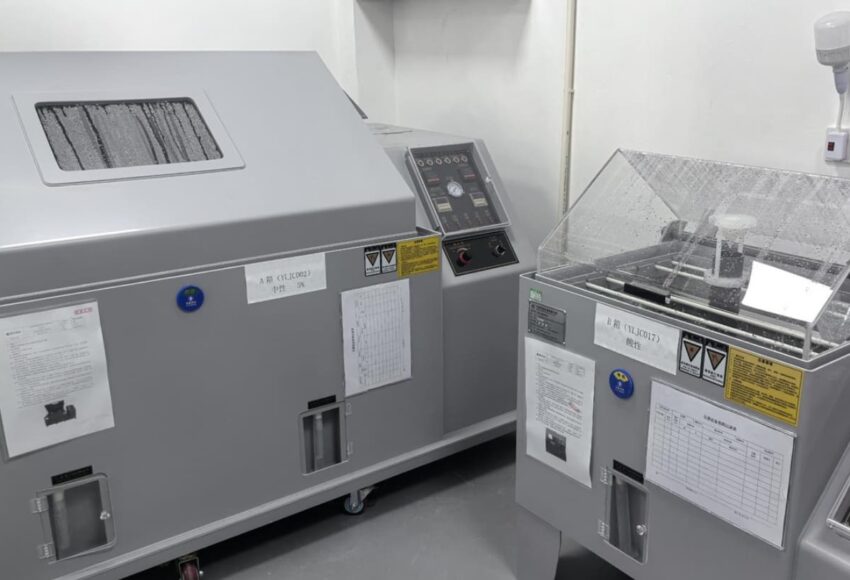
Salt Spray Test Requirements by Product Type: Hours and Acceptance Criteria

Salt spray test requirements define how long a product or coating is exposed to a controlled corrosive environment and how its corrosion performance is evaluated after testing. Requirements can vary according to the product, material, coating system, intended environment, applicable standard, and customer specification.
A product may be tested for 24, 96, 240, 500, or more than 1,000 hours depending on the specified requirement. The exposure duration alone does not determine whether a product passes the test. Acceptance criteria, such as red rust, white corrosion, blistering, coating delamination, or corrosion around a scribe, must also be defined.
Common salt spray testing methods include ASTM B117 and ISO 9227. These standards establish controlled test procedures, while the required exposure duration and acceptance criteria generally come from the applicable product specification, coating specification, customer requirement, or other referenced standard.
What Are Salt Spray Test Requirements?
Salt spray test requirements usually define several important test conditions:
- Applicable test method
- Type of salt spray test
- Exposure duration
- Specimen preparation
- Whether the coating must be scribed
- Areas of the specimen to be evaluated
- Corrosion evaluation method
- Acceptance criteria
For example, a specification could require a coated steel component to undergo a defined period of neutral salt spray exposure, followed by evaluation for red rust, blistering, coating deterioration, or corrosion spread from a scribed area.
For this reason, specifying only a 500-hour salt spray test is often incomplete. The test specification should also state what condition the specimen must meet after 500 hours.
Do ASTM B117 and ISO 9227 Specify Pass or Fail Requirements?
ASTM B117 and ISO 9227 primarily define salt spray test methods and operating conditions. They do not establish one universal exposure duration or pass/fail requirement for every product.
ASTM B117 describes the operation of salt spray (fog) apparatus and controlled exposure conditions commonly used for corrosion testing.
ISO 9227 covers salt spray test methods including:
- Neutral Salt Spray (NSS)
- Acetic Acid Salt Spray (AASS)
- Copper-Accelerated Acetic Acid Salt Spray (CASS)
The appropriate test method, duration, and acceptance criteria must therefore be determined from the applicable specification.
A buyer may specify, for example:
ASTM B117, 500 hours, no red rust on significant surfaces.
Another specification may require evaluation of coating blistering or corrosion creep after exposure.
This distinction is important when comparing salt spray test results. The number of hours has meaning only when considered together with the test method, specimen preparation, coating system, and acceptance criteria.
Common Salt Spray Test Durations
Salt spray exposure periods can range from several hours to thousands of hours.
Frequently specified durations include:
| Test Duration | Examples of How the Duration May Be Used |
| 24 hours | Short-duration screening or certain decorative finishes |
| 48 hours | Short-duration coating or plating evaluations |
| 72 hours | Certain plated components and hardware specifications |
| 96 hours | Common intermediate corrosion-resistance requirement |
| 168 hours | One-week exposure used in some coating specifications |
| 240 hours | Longer-duration coated component evaluation |
| 500 hours | Frequently specified for higher corrosion-resistance coatings |
| 720 hours | Extended corrosion-resistance testing |
| 1,000 hours | High-duration coating or component specifications |
| 1,500+ hours | Specialized specifications requiring extended exposure |
These durations should not be interpreted as universal requirements for particular products. A zinc-plated fastener, powder-coated enclosure, or automotive bracket can have very different requirements depending on its coating specification and application.
Salt Spray Test Requirements by Product Type
Different products require different corrosion-control strategies. The correct salt spray specification should therefore be established from the actual product and its applicable requirements.
Fasteners and Hardware
Fasteners are frequently subjected to salt spray testing because corrosion can affect appearance, threaded connections, assembly performance, and service life.
Products can include:
- Screws
- Bolts
- Nuts
- Washers
- Hinges
- Brackets
- Clips
- Locks
- Door hardware
Corrosion resistance depends heavily on the surface treatment.
Common systems include:
- Zinc electroplating
- Zinc alloy coatings
- Mechanical plating
- Organic coatings
- Conversion coatings
- Hot-dip galvanizing
A fastener specification may define an exposure period and separately establish the permitted amount of white corrosion or red rust.
For zinc-coated products, this distinction can be particularly important because white corrosion and red rust represent different forms or stages of corrosion and may have separate acceptance criteria.
The required salt spray performance should therefore be taken from the relevant fastener, coating, OEM, engineering, or customer specification.
Salt Spray Requirements for Powder Coating
Powder-coated products are commonly evaluated using salt spray testing to assess the corrosion protection provided by the complete coating system.
Products may include:
- Outdoor furniture
- Metal cabinets
- Electrical enclosures
- Appliances
- Architectural components
- Machinery housings
- Steel frames
- Equipment panels
Performance is affected by several factors, including:
- Substrate material
- Surface preparation
- Pretreatment system
- Powder chemistry
- Coating thickness
- Curing conditions
- Edge coverage
- Coating defects
For coated panels, the test may require a scribe through the coating before salt spray exposure. Corrosion development around the scribe can then be measured after testing.
Other evaluation criteria may include:
- Blistering
- Rusting
- Loss of adhesion
- Corrosion creep
- Delamination
- Surface deterioration
A statement such as salt spray certified powder coating therefore provides limited technical information by itself. The underlying test method, exposure duration, substrate, coating system, specimen preparation, and acceptance criteria are needed to understand the claimed corrosion performance.
Salt Spray Requirements for Automotive Components
Automotive components may be exposed to water, humidity, road contaminants, deicing salts, and temperature changes during service.
Components commonly evaluated for corrosion resistance include:
- Fasteners
- Brackets
- Clips
- Retainers
- Chassis components
- Underbody components
- Plated metal parts
- Coated structural components
Automotive requirements are frequently established through OEM or component-specific specifications.
These specifications may define:
- Test method
- Exposure cycle
- Number of cycles or test hours
- Coating thickness
- Preconditioning
- Scribing requirements
- Permitted corrosion
- Evaluation areas
Some automotive specifications also use cyclic corrosion testing involving changing wet, dry, humidity, and salt conditions. Therefore, ASTM B117 or ISO 9227 should not automatically be assumed to be the required automotive corrosion test.
Salt Spray Requirements for Outdoor Furniture
Outdoor furniture contains numerous coated and plated components that may be exposed to rain, humidity, condensation, and airborne contaminants.
Products can include:
- Metal chairs
- Tables
- Furniture frames
- Hinges
- Fasteners
- Brackets
- Furniture fittings
Powder-coated steel and aluminum are common materials in this category.
Salt spray testing may be used to evaluate whether the surface treatment provides the required level of corrosion protection. Particular attention may be given to:
- Welded areas
- Edges
- Fastener locations
- Scratches or coating damage
- Coating adhesion
- Rust development
Products intended for coastal or highly corrosive environments may require more demanding corrosion specifications.
Salt Spray Requirements for Construction and Architectural Hardware
Construction products can experience prolonged exposure to moisture and changing environmental conditions.
Examples include:
- Brackets
- Connectors
- Railings
- Fencing components
- Door hardware
- Architectural fittings
- Coated steel components
- Galvanized components
The required corrosion resistance depends on the product specification, coating system, installation environment, and applicable construction requirements.
A coating designed for an indoor fitting may have a substantially different specification from one intended for exterior or coastal use.
Salt Spray Requirements for Marine Components
Marine and coastal environments create demanding corrosion conditions because of frequent exposure to salt-containing moisture.
Components may include:
- Marine fasteners
- Fittings
- Brackets
- Hardware
- Equipment housings
- Coated metal assemblies
Salt spray testing can form part of a corrosion evaluation programme for these products.
However, salt spray testing should not automatically be interpreted as a direct simulation of years of marine exposure. Actual service environments can involve UV radiation, immersion, drying, temperature variation, mechanical wear, pollutants, and other conditions that a continuous salt spray test does not reproduce.
The applicable marine or product specification should determine the required testing programme.
Salt Spray Requirements for Electrical and Electronic Enclosures
Metal enclosures and housings may require corrosion testing when used in outdoor, industrial, marine, or high-humidity environments.
Typical products include:
- Electrical cabinets
- Junction boxes
- Control panels
- Lighting housings
- Equipment enclosures
- Communication equipment housings
Corrosion can affect appearance and may eventually compromise enclosure integrity.
Evaluation may focus on:
- Coating blistering
- Rust formation
- Corrosion at edges
- Corrosion around fasteners
- Scribe creep
- Coating adhesion
The relevant enclosure or product standard should be reviewed before selecting the salt spray conditions.
How Are Salt Spray Test Acceptance Criteria Determined?
Salt spray test acceptance criteria define the condition a specimen must meet after the required exposure period.
The appropriate criteria depend on the specification being followed.
Red Rust
Red rust generally indicates corrosion of an exposed ferrous substrate.
A specification may define:
- No visible red rust
- Maximum percentage of rusted area
- No red rust on significant surfaces
- A defined rust rating
White Corrosion
White corrosion is commonly associated with corrosion products on zinc and zinc-coated surfaces.
Specifications may establish separate limits for white corrosion and red rust.
Blistering
Coated surfaces may be inspected for blister formation after salt spray exposure.
The size, frequency, and distribution of blisters can be evaluated according to the referenced assessment method.
Corrosion Creep From a Scribe
Coated test specimens may be deliberately scribed before exposure.
After testing, the distance that corrosion has progressed from the scribe can be measured and compared with the specified maximum.
Coating Delamination
Salt spray exposure may reveal loss of adhesion between the coating and substrate.
A specification may limit the amount of coating separation permitted around damaged or scribed areas.
Percentage of Surface Corrosion
Some requirements establish a maximum percentage of the evaluated surface that may show corrosion after testing.
Consequently, a salt spray test result should include both the exposure duration and the observed condition of the specimen according to the specified evaluation criteria.
How Many Hours of Salt Spray Testing Does a Product Need?
Determine the required test duration from the applicable product documents or agreement, such as:
- Applicable product standard
- Engineering drawing
- Coating specification
- OEM requirement
- Customer specification
- Purchase order
- Approved sample or technical agreement
If these documents do not specify a duration, agree on the exposure period and acceptance criteria before testing begins. Evaluate the results against both requirements.
For example, a 500-hour test result meets the requirement only when the coating also satisfies the specified acceptance criteria.
ASTM B117 vs ISO 9227 Requirements
ASTM B117 and ISO 9227 are among the most widely referenced salt spray test standards.
| Area | ASTM B117 | ISO 9227 |
| Main purpose | Salt spray/fog test practice | Salt spray corrosion test methods |
| Neutral salt spray | Yes | Yes |
| AASS | Different practices/specifications may apply | Included |
| CASS | Different practices/specifications may apply | Included |
| Universal product duration | No | No |
| Universal pass/fail criteria | No | No |
For ISO-based specifications, the applicable salt spray method may be identified as NSS, AASS, or CASS.
The test method should always be confirmed before testing because different methods use different test solutions and conditions.
How to Specify a Salt Spray Test
A complete testing request should provide enough information for the laboratory to conduct and evaluate the test correctly.
Important information includes:
- Product or specimen identification
- Applicable standard
- Salt spray method
- Exposure duration
- Substrate material
- Coating or plating type
- Coating thickness where applicable
- Specimen preparation requirements
- Scribing requirements
- Evaluation method
- Acceptance criteria
For example, a complete requirement might specify a test method, 500-hour exposure, defined specimen preparation, and a maximum permitted level of corrosion after testing.
This provides a much clearer basis for evaluation than simply requesting a 500-hour salt spray test.
Common Salt Spray Test Specification Mistakes
Several problems can make corrosion test results difficult to interpret.
Common examples include:
- Specifying test hours without acceptance criteria
- Failing to identify the applicable test standard
- Assuming ASTM B117 establishes the required exposure duration
- Assuming ISO 9227 establishes universal pass/fail criteria
- Comparing results obtained using different salt spray methods
- Ignoring coating thickness and surface preparation
- Using test duration alone as a corrosion-resistance rating
- Applying a general requirement when an OEM specification exists
Clear test specifications help ensure that laboratories, suppliers, and buyers evaluate corrosion performance using the same criteria.
Salt spray test requirements should define the test method, exposure duration, specimen preparation, evaluation procedure, and acceptance criteria. Test hours alone provide an incomplete basis for determining corrosion performance.
Before testing begins, the applicable product standard, coating specification, engineering requirement, or customer specification should be reviewed to establish clear pass/fail criteria.

 Request Free Sample Report