

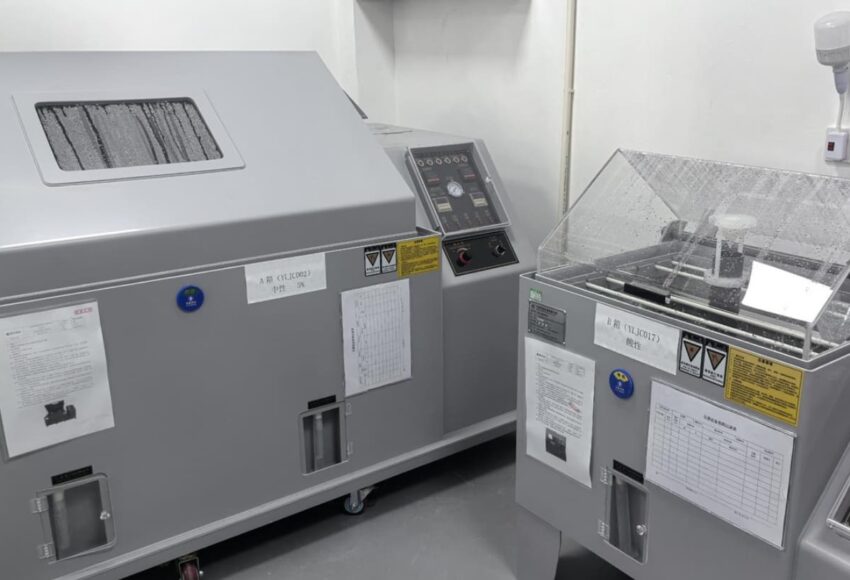
Why Products Fail Salt Spray Testing: 6 Common Reasons
A salt spray test failure occurs when a test specimen does not meet the specified corrosion resistance or acceptance criteria after exposure to a controlled salt spray environment. Failure may appear as red rust, white corrosion, blistering, peeling, corrosion creep, pitting, or other forms of coating deterioration.
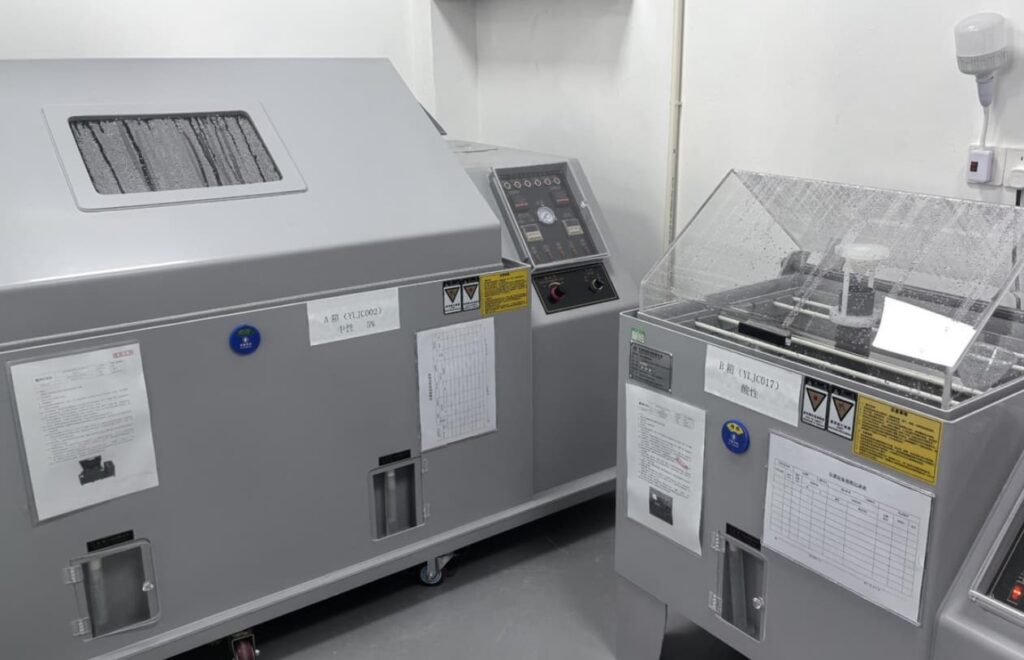
Salt spray testing is widely used to evaluate the corrosion resistance of metals, electroplated finishes, powder coatings, paints, and other protective surface treatments. Testing is commonly performed according to standards such as ASTM B117 and ISO 9227, although the required exposure duration and acceptance criteria are normally defined by the applicable product specification, coating specification, engineering drawing, or customer requirement.
When a product fails, the cause can often be traced to surface preparation, coating thickness, adhesion, curing, plating quality, material selection, manufacturing variation, or handling damage.
Understanding the failure pattern is therefore an important part of determining what went wrong and preventing the same problem in subsequent production.
What Does a Salt Spray Test Failure Mean?
A salt spray test exposes specimens to a controlled corrosive environment for a specified period. After exposure, the specimens are evaluated according to defined acceptance criteria.
A failure occurs when the observed corrosion or coating deterioration exceeds those criteria.
Depending on the specification, failure indicators may include:
- Red rust appearing before the required exposure period
- Excessive white corrosion on zinc or zinc-alloy coatings
- Blistering of paint or powder coating
- Peeling or flaking
- Corrosion around scratches or scribed areas
- Pitting of the substrate
- Loss of coating adhesion
- Excessive corrosion creep
- Surface deterioration beyond the permitted area
The test duration alone does not determine whether a specimen passes or fails. A requirement such as 240, 500, or 1,000 hours only defines the exposure period. The applicable specification must also define what condition is acceptable at the end of that period.
For example, a specification may permit limited white corrosion while prohibiting red rust on the base metal. Another specification may establish maximum corrosion creep from a scribed line.
For more information about selecting an appropriate exposure period, see How Many Hours of Salt Spray Testing Does Your Product Need?.
Common Salt Spray Test Failure Symptoms
The appearance and location of corrosion can provide useful clues about the underlying problem.
Red Rust
Red rust generally indicates corrosion of an iron or steel substrate.
If red rust appears earlier than permitted, possible causes include:
- Insufficient coating thickness
- Exposed base metal
- Coating porosity
- Surface damage
- Poor coating adhesion
- Inadequate plating coverage
- Weak protection at edges or recesses
The location of the rust should also be examined. Rust concentrated around edges, holes, threads, or contact points may indicate localized coating coverage problems.
White Corrosion
White corrosion is commonly associated with zinc and zinc-alloy coatings.
Its appearance may be related to:
- Deterioration of the zinc layer
- Inadequate passivation
- Poor plating quality
- Surface contamination
- Improper storage
- Coating process variation
The presence of white corrosion does not automatically indicate failure. The applicable acceptance criteria determine how much corrosion is permitted and at what stage of the test.
Blistering
Blisters appear when localized areas of a coating lift away from the substrate.
Common causes include:
- Contamination beneath the coating
- Poor surface preparation
- Moisture trapped beneath the coating
- Inadequate pretreatment
- Weak coating adhesion
- Improper curing
Blistering can allow the corrosive environment to reach the substrate and accelerate further deterioration.
Peeling or Flaking
Peeling indicates that the protective coating has lost adhesion to the underlying surface.
Possible causes include:
- Oil or grease contamination
- Inadequate cleaning
- Poor pretreatment
- Incorrect curing
- Incompatible coating and substrate
- Insufficient surface profile
Salt spray exposure can reveal adhesion weaknesses that were difficult to identify during visual inspection.
Corrosion Creep
Corrosion creep describes corrosion spreading beneath a coating from an intentionally scribed area, damaged section, edge, or other exposed point.
The amount of creep may be measured after testing where required by the applicable specification.
Excessive creep can indicate weaknesses in:
- Pretreatment
- Coating adhesion
- Surface preparation
- Coating system selection
- Application quality
Pitting
Pitting produces small, localized areas of corrosion that penetrate into the metal surface.
Possible contributing factors include coating porosity, material characteristics, contamination, and localized coating defects.
Uneven Corrosion
When some parts of a specimen corrode much more rapidly than others, the problem may be associated with:
- Uneven coating thickness
- Inconsistent surface preparation
- Poor coverage around edges
- Application variation
- Localized contamination
- Manufacturing process inconsistency
The corrosion pattern should therefore be recorded during failure analysis.
Common Causes of Salt Spray Test Failure
Salt spray failures frequently originate during surface preparation, coating application, curing, plating, assembly, storage, or handling.
1. Poor Surface Preparation
Surface preparation is one of the most important factors affecting coating performance.
Before a protective coating is applied, the substrate may need to be cleaned, degreased, blasted, chemically treated, or otherwise prepared according to the coating process.
Contaminants can interfere with adhesion.
Common problems include:
- Oil
- Grease
- Dust
- Rust
- Oxides
- Cleaning residues
- Moisture
- Processing chemicals
When contaminants remain beneath the coating, corrosive solution can penetrate weak areas and cause blistering, peeling, or underfilm corrosion.
What to check:
- Cleaning procedures
- Degreasing process
- Surface cleanliness
- Pretreatment concentration
- Rinsing
- Drying conditions
- Time between pretreatment and coating
Surface preparation should be controlled as part of the production process.
2. Insufficient Coating Thickness
Protective coatings are normally designed to achieve a specified thickness range.
If the coating is too thin, the protection provided to the substrate may be reduced.
This problem can affect:
- Zinc plating
- Powder coating
- Paint
- E-coating
- Galvanized coatings
- Other metallic or organic protective systems
Thickness can also vary across a single component. Edges, corners, recesses, threads, and complex geometries may receive less protection than flat surfaces.
When investigating a failure, coating thickness should be measured at representative locations rather than relying on a single measurement.
What to check:
- Required coating thickness
- Actual measured thickness
- Measurement locations
- Edge and corner coverage
- Batch-to-batch variation
- Application parameters
A coating thickness test can help determine whether the applied coating meets the specified thickness requirement.
3. Poor Coating Adhesion
A coating may have adequate thickness and still provide poor corrosion protection when adhesion to the substrate is weak.
Poor adhesion may result from:
- Contaminated surfaces
- Incorrect pretreatment
- Incompatible coating materials
- Improper application
- Insufficient surface preparation
- Incorrect curing
During salt spray exposure, moisture can enter weak interfaces and promote blistering or delamination.
When peeling or blistering occurs, the investigation should therefore include both the coating itself and the substrate preparation process.
4. Incomplete or Incorrect Curing
Powder coatings, paints, and other cured coating systems require controlled time and temperature conditions.
Problems can occur when:
- Oven temperature is too low
- Parts do not reach the required metal temperature
- Cure time is too short
- Oven temperature distribution is inconsistent
- Production line speed is too high
- Coating manufacturer curing instructions are not followed
An under-cured coating may have reduced adhesion, chemical resistance, and corrosion protection.
Excessive curing can also affect some coating systems.
Actual part temperature and curing conditions should therefore be verified during troubleshooting.
5. Pinholes, Porosity and Coating Defects
Small defects can create pathways through the protective coating.
Typical defects include:
- Pinholes
- Voids
- Cracks
- Porosity
- Thin spots
- Incomplete coverage
- Embedded contamination
These defects may be difficult to identify during routine visual inspection but can become obvious after salt spray exposure.
Localized rust appearing repeatedly in similar areas may indicate a recurring application or coating coverage problem.
6. Incorrect Pretreatment
Pretreatment helps prepare a metal surface for coating and can contribute significantly to adhesion and corrosion protection.
Depending on the material and coating system, pretreatment processes may involve cleaning, conversion coating, phosphating, or other chemical treatment.
Process variables can include:
- Chemical concentration
- pH
- Temperature
- Treatment time
- Rinse quality
- Water quality
- Bath contamination
A coating line can therefore produce visually acceptable parts that still perform poorly during corrosion testing if pretreatment is inadequately controlled.
Why Powder Coating Fails Salt Spray Testing
Powder coating salt spray test failure is frequently associated with problems beneath or within the coating layer.
Common causes include:
Poor Pretreatment
Powder coating requires a properly prepared substrate. Oil, oxidation, processing residues, or inadequate conversion treatment can reduce adhesion and corrosion resistance.
Low or Uneven Film Thickness
Thin areas may develop around:
- Sharp edges
- Corners
- Welds
- Recesses
- Holes
- Complex geometries
These areas can become early corrosion points during testing.
Incomplete Cure
Incorrect oven conditions can prevent the powder coating from reaching its intended performance characteristics.
Pinholes and Porosity
Air, moisture, contamination, or substrate conditions can create small openings through the coating.
Mechanical Damage
Scratches or impact damage after coating can expose the substrate before the specimen enters the salt spray chamber.
When a powder-coated component fails, the investigation should consider pretreatment, dry film thickness, cure conditions, adhesion, surface defects, and damage together.
Why Zinc-Plated Parts Fail Salt Spray Testing
Zinc coatings are widely used to protect steel components such as screws, bolts, brackets, clips, and other hardware.
Common failure causes include:
- Insufficient zinc thickness
- Uneven plating
- Poor passivation
- Plating bath problems
- Surface contamination
- Handling damage
- Weak coverage on threads or recesses
- Process variation between batches
The distinction between white corrosion and red rust is particularly important when evaluating zinc-coated products.
White corrosion generally relates to deterioration of the zinc surface, while red rust indicates corrosion of the underlying iron or steel.
The acceptance criteria should specify which type of corrosion is evaluated and when it becomes unacceptable.
Salt Spray Failure Troubleshooting Guide
| Failure Symptom | Possible Causes | What to Check |
| Early red rust | Thin coating, exposed substrate, coating damage | Coating thickness, coverage, handling |
| White corrosion | Zinc deterioration, passivation issue | Plating process, passivation, storage |
| Blistering | Contamination, moisture, weak adhesion | Cleaning, pretreatment, adhesion |
| Peeling or flaking | Poor adhesion, incorrect curing | Surface preparation, cure conditions |
| Corrosion creep | Weak adhesion or coating protection | Pretreatment, coating system, scribe area |
| Pitting | Porosity or localized coating defects | Surface condition, coating integrity |
| Uneven corrosion | Process or thickness variation | Application consistency, thickness distribution |
| Edge corrosion | Inadequate edge coverage | Coating thickness at edges and corners |
This type of failure analysis can help narrow the investigation before production parameters are changed.
Manufacturing Process Variation and Salt Spray Failure
A coating system that performs successfully during initial qualification can later fail if the manufacturing process changes.
Potential sources of variation include:
- Plating bath chemistry
- Pretreatment concentration
- Oven temperature
- Coating viscosity
- Powder application settings
- Line speed
- Equipment condition
- Operator technique
- Material batches
- Cleaning procedures
This explains why two batches manufactured to the same nominal specification may produce different corrosion test results.
Process records from both passing and failing batches can be compared to identify changes associated with the failure.
Damage During Manufacturing, Assembly and Handling
Coating performance can also be compromised after the coating process is complete.
Damage may occur during:
- Assembly
- Fastening
- Bending
- Stamping
- Transportation
- Stacking
- Packaging
- Warehouse handling
Scratches and impact marks can expose the substrate directly to the corrosive environment.
Contact points created by fixtures or racks during coating can also produce areas with reduced protection.
Finished products should therefore be inspected for coating damage before specimens are selected for corrosion testing.
Storage Conditions Before Testing
Storage can influence the condition of coated products before they reach the laboratory.
Potential problems include:
- High humidity
- Condensation
- Water exposure
- Chemical contamination
- Inadequate packaging
- Prolonged storage under unsuitable conditions
If corrosion has already started before testing, the specimen may fail earlier during salt spray exposure.
Storage history should be reviewed when unexplained failures occur.
How to Investigate a Failed Salt Spray Test
A failed result should lead to a structured root-cause investigation.
1. Review the Test Requirement
Confirm:
- Test standard
- Test method
- Required exposure duration
- Acceptance criteria
- Specimen preparation requirements
- Evaluation method
A useful starting point is confirming exactly what constitutes failure under the applicable specification.
2. Review the Failure Location
Determine where corrosion first appeared.
Pay particular attention to:
- Edges
- Welds
- Holes
- Threads
- Recesses
- Scratches
- Bends
- Contact points
The location can provide useful evidence about coating coverage or handling problems.
3. Measure Coating Thickness
Check whether the coating meets specification and whether thickness is consistent across the component.
4. Examine Surface Preparation
Review cleaning and pretreatment records from the affected production batch.
5. Check Cure Conditions
For powder coating and paint systems, verify the actual curing time and temperature.
6. Review Coating and Plating Processes
Check process records for unusual changes in:
- Chemical concentration
- Bath condition
- Application parameters
- Line speed
- Equipment settings
7. Compare Passing and Failing Samples
If previous batches passed the same test, comparing their production records can help identify process changes.
8. Correct the Root Cause and Retest
Once corrective actions have been implemented, representative specimens can be retested under the same specified conditions.
How to Prevent Salt Spray Test Failures
Corrosion performance should be controlled throughout production.
Key preventive measures include:
- Define the required test standard and acceptance criteria before production
- Select an appropriate material and coating system
- Standardize cleaning and pretreatment
- Control coating or plating thickness
- Monitor coating application parameters
- Verify curing conditions
- Inspect edges, corners, welds, and recesses
- Prevent damage during assembly and handling
- Maintain coating and plating equipment
- Monitor process chemistry where applicable
- Keep production and inspection records
- Conduct corrosion testing when required by the quality plan
For products with defined corrosion performance requirements, early testing can identify coating problems before a complete production lot is manufactured.
When Should a Product Be Retested?
Retesting may be appropriate after a confirmed root cause has been identified and corrective action has been implemented.
Examples include:
- Pretreatment parameters have been corrected
- Coating thickness has been adjusted
- Curing conditions have been corrected
- Plating chemistry has been restored
- A coating application defect has been resolved
- Damaged specimens have been replaced with properly produced samples
Simply repeating the same test without investigating the original failure provides limited information about whether the underlying production problem has been corrected.
The new test should use representative specimens produced under the corrected manufacturing conditions.
Salt Spray Test Duration and Acceptance Criteria
One of the most common mistakes in corrosion testing is treating the number of exposure hours as the complete requirement.
A specification such as 500 hours salt spray resistance is incomplete unless the applicable evaluation criteria are also known.
The requirement may specify:
- Maximum permitted red rust
- Maximum white corrosion
- Permitted blistering
- Maximum corrosion creep
- Areas excluded from evaluation
- Evaluation after cleaning
- Requirements for scribed or unscribed specimens
The correct salt spray requirement therefore depends on the product, coating system, test standard, and specification.
See Salt Spray Test Requirements by Product Type and Industry for more information about defining corrosion resistance requirements.
Salt spray test failures provide useful evidence about weaknesses in a coating system or manufacturing process. Red rust, white corrosion, blistering, peeling, pitting, and corrosion creep can each point toward different potential causes.
A structured failure investigation should begin with the applicable acceptance criteria, followed by examination of the failure pattern, coating thickness, surface preparation, pretreatment, curing conditions, process consistency, and handling. Once the root cause has been identified and corrected, representative specimens can be retested to verify corrosion performance.
Frequently Asked Questions
1. What is the most common cause of salt spray test failure?
There is no single cause that applies to every product. Poor surface preparation, inadequate coating thickness, coating defects, weak adhesion, and process variation are common factors associated with early corrosion.
2. Why does powder coating fail salt spray testing?
Common causes include inadequate pretreatment, insufficient film thickness, poor edge coverage, incomplete curing, contamination, pinholes, weak adhesion, and mechanical damage.
3. Why does red rust appear during a salt spray test?
Red rust on steel generally indicates that the corrosive environment has reached the iron-containing substrate. This can occur through thin coatings, exposed areas, coating damage, porosity, or coating deterioration.
4. Does white rust mean a zinc-plated part has failed?
It depends on the applicable acceptance criteria. White corrosion indicates deterioration of the zinc surface, but some specifications permit a defined amount before the result is classified as a failure.
5. Can a product pass coating thickness requirements and still fail salt spray testing?
Yes. Corrosion resistance also depends on surface preparation, coating adhesion, pretreatment, curing, coating integrity, substrate condition, and manufacturing consistency.
6. Can thicker powder coating improve salt spray resistance?
Adequate film thickness is important, but increasing thickness alone does not resolve problems caused by poor pretreatment, weak adhesion, contamination, incomplete curing, or coating defects.
7. What should be checked after a salt spray test failure?
Review the acceptance criteria, corrosion location, coating thickness, surface preparation, pretreatment, cure conditions, coating integrity, production records, and handling history. The findings can then be used to determine corrective action.

 Request Free Sample Report