

How Many Hours of Salt Spray Testing Does Your Product Need
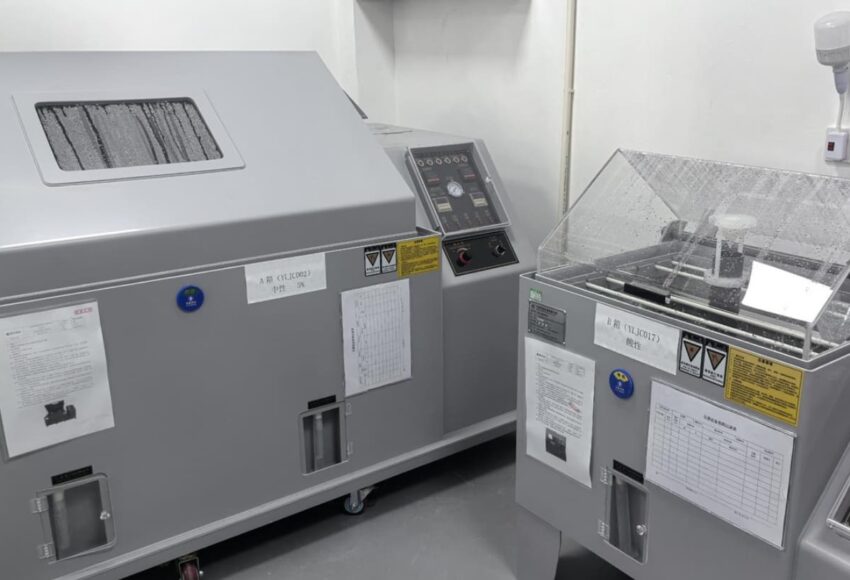
Salt spray testing is one of the most widely used methods for evaluating corrosion resistance in metals, coatings, and surface finishes. It provides a controlled way to assess how products perform when exposed to a corrosive salt fog environment and is commonly used to verify coating durability, support quality control programs, and meet customer specifications.
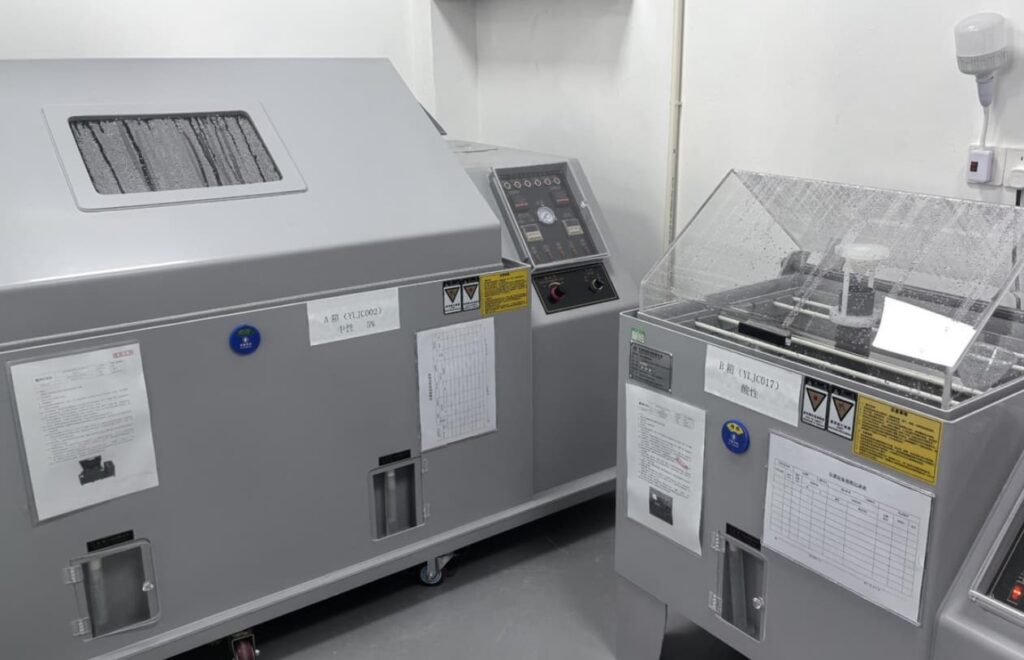
One of the most common questions during product development and quality planning is how many hours of salt spray testing are required.
Salt spray test duration should be specified according to the product application, corrosion exposure, coating system, expected service life, applicable standard, and customer requirements. Indoor decorative components may require limited corrosion resistance. Automotive or marine components may require more demanding performance criteria.
Understanding these factors helps establish realistic corrosion resistance requirements and support product quality, compliance, and long-term durability.
What is Salt Spray Testing?
Salt spray testing, also called salt fog testing, is an accelerated corrosion test used to evaluate the corrosion resistance of metallic materials and protective coatings.
The test exposes samples to a controlled salt fog environment, typically using a 5% sodium chloride (NaCl) solution inside a testing chamber.
The most widely used test method is:
- ASTM B117 – Standard Practice for Operating Salt Spray (Fog) Apparatus
Other commonly referenced standards include:
- ISO 9227
- IEC 60068-2-11
- JIS Z 2371
The objective of salt spray testing is to compare the corrosion performance of different coatings and verify whether products meet specified requirements.
How Many Hours of Salt Spray Testing Does Your Product Need?
Select the options below to receive a preliminary test-duration range based on your product environment, coating, application, and requirements.
Recommendation
Why There is No Standard Salt Spray Test Duration
Products operate in very different environments and face varying levels of corrosion exposure.
For example:
- A decorative indoor fitting may require minimal corrosion protection
- An outdoor furniture component may need significantly greater resistance
- A marine fastener may require extremely high corrosion performance
As a result, the required test duration should always be based on product-specific requirements rather than a fixed industry-wide number.
Factor 1: Product Environment
The operating environment is often the most important factor when determining salt spray test duration.
Indoor Products
Products used in dry indoor environments generally experience lower corrosion exposure.
Examples include:
- Decorative hardware
- Indoor furniture fittings
- Office equipment components
- Consumer products used indoors
Typical requirements:
24 to 96 hours
Outdoor Products
Outdoor products are exposed to:
- Rain
- Moisture
- Humidity
- Temperature changes
- Air pollutants
Examples include:
- Outdoor furniture
- Fencing systems
- Architectural hardware
- Construction brackets
Typical requirements:
240 to 500 hours
Marine and Coastal Environments
Marine environments are highly aggressive due to constant exposure to salt and humidity.
Examples include:
- Marine hardware
- Boat accessories
- Coastal infrastructure components
- Offshore equipment
Typical requirements:
500 to 1000+ hours
Factor 2: Coating Type and Performance
The coating system significantly affects corrosion resistance performance.
| Coating Type | Typical Salt Spray Range |
| Decorative Zinc Plating | 24 to 96 Hours |
| Nickel Chrome Plating | 48 to 240 Hours |
| Electroplating with Trivalent Passivation | 96 to 240 Hours |
| Powder Coating | 240 to 1000+ Hours |
| E-Coating | 240 to 1000+ Hours |
| Hot-Dip Galvanizing | 500+ Hours |
| Duplex Coating Systems | 1000+ Hours |
Coating quality, application method, pretreatment, and thickness all influence performance.
Factor 3: Product Function and Usage
Decorative Products
Products designed mainly for appearance typically require lower corrosion resistance.
Examples:
- Decorative fittings
- Interior accessories
- Display components
- Indoor fixtures
Functional Products
Products with structural or mechanical roles require stronger corrosion protection.
Examples:
- Fasteners
- Brackets
- Hinges
- Automotive hardware
- Construction components
Factor 4: Customer Specifications and Standards
In many cases, buyers define the required salt spray duration.
Requirements may come from:
- Engineering drawings
- Purchase orders
- Product specifications
- OEM standards
- Retailer requirements
Examples:
- ASTM B117 – 96 Hours
- ASTM B117 – 240 Hours
- ASTM B117 – 500 Hours
- ISO 9227 – 720 Hours
Important Clarification
ASTM B117 defines the testing method only. It does not specify required test durations.
Factor 5: Expected Product Lifespan
| Expected Service Life | Corrosion Requirement Level |
| 1 to 3 Years | Basic protection |
| 5 to 10 Years | Moderate to high protection |
| 10+ Years | High corrosion resistance |
Longer service life typically requires higher salt spray performance.
Typical Salt Spray Test Hours by Product Type
| Product Type | Typical Requirement |
| Decorative Plated Parts | 24 to 48 Hours |
| Indoor Hardware | 48 to 96 Hours |
| Consumer Electronics Components | 96 to 240 Hours |
| Fasteners and Brackets | 96 to 240 Hours |
| Outdoor Furniture | 240 to 500 Hours |
| Architectural Hardware | 240 to 500 Hours |
| Automotive Components | 240 to 1000+ Hours |
| Marine Equipment | 500 to 1000+ Hours |
Typical Salt Spray Requirements by Industry
| Industry | Common Requirement |
| Consumer Products | 24 to 96 Hours |
| Furniture | 96 to 500 Hours |
| Construction Hardware | 240 to 500 Hours |
| Automotive | 240 to 1000+ Hours |
| Marine Equipment | 500 to 1000+ Hours |
| Industrial Equipment | 240 to 720 Hours |
| Electrical Equipment | 96 to 500 Hours |
Common Mistakes When Choosing Test Duration
Assuming More Hours Means Better Quality
Higher test hours do not always mean better performance. Requirements should match actual use conditions.
Ignoring Product Environment
Indoor and outdoor conditions differ significantly and should not share the same requirements.
Copying Competitor Specifications
Competitor standards may not reflect your product’s needs.
Ignoring Coating Type
Different coatings perform differently under corrosion conditions.
Overlooking Customer Requirements
Incorrect specifications often lead to testing failures.
Why Salt Spray Testing Does Not Predict Real-Life Performance
Salt spray testing is an accelerated laboratory method used for comparison and quality control.
It does not directly translate to real-world lifespan.
Factors affecting real-life performance include:
- UV exposure
- Temperature changes
- Pollution
- Mechanical wear
- Maintenance
- Product design
How to Determine the Right Salt Spray Test Duration
Consider the following:
- Product environment
- Functional vs decorative use
- Coating system
- Customer requirements
- Expected lifespan
- Industry standards
These factors help define realistic and appropriate corrosion resistance targets.
Determine the required salt spray test duration based on:
- Environmental exposure
- Coating type
- Product function
- Customer specifications
- Expected service life
- Applicable product standards
Confirm the exposure period and acceptance criteria before testing begins. This helps ensure results can be evaluated consistently.
Need Help Determining the Right Salt Spray Test Duration?
ECQA provides salt spray testing for products, metals, coatings, and surface finishes according to standards including ASTM B117, ISO 9227, IEC 60068-2-11, ISO 4611, and other applicable international and national standards.
As a CNAS-accredited laboratory, ECQA can help you:
- Select an appropriate test method and duration
- Conduct neutral and acidic salt spray testing
- Evaluate corrosion, rust, blistering, and coating failure
- Verify compliance with buyer specifications and applicable standards
- Receive a professional test report for quality and compliance purposes
Contact ECQA to discuss your product, coating type, application environment, and testing requirements.
Frequently Asked Questions About Salt Spray Testing
1. What is a good salt spray test result?
It depends on the product’s intended use and requirements.
2. Is 96 hours of salt spray testing enough?
It may be sufficient for indoor or decorative products but not for outdoor or marine applications.
3. Does a higher test hour mean better quality?
Not necessarily. It must match the product’s real-world conditions.
4. Does ASTM B117 specify required hours?
No. It defines the testing method only.
5. How many hours do automotive parts require?s?
Typically between 240 and 1000+ hours depending on specifications.

 Request Free Sample Report