

Importing Small Electrical Appliances from China to South Korea
Small electrical appliances manufactured in China must meet applicable South Korean safety and regulatory requirements before they can be imported and sold in the Korean market. Depending on the product category, these requirements may include KC safety certification, electromagnetic compatibility (EMC) assessment, energy efficiency requirements, and Korean-language labeling.
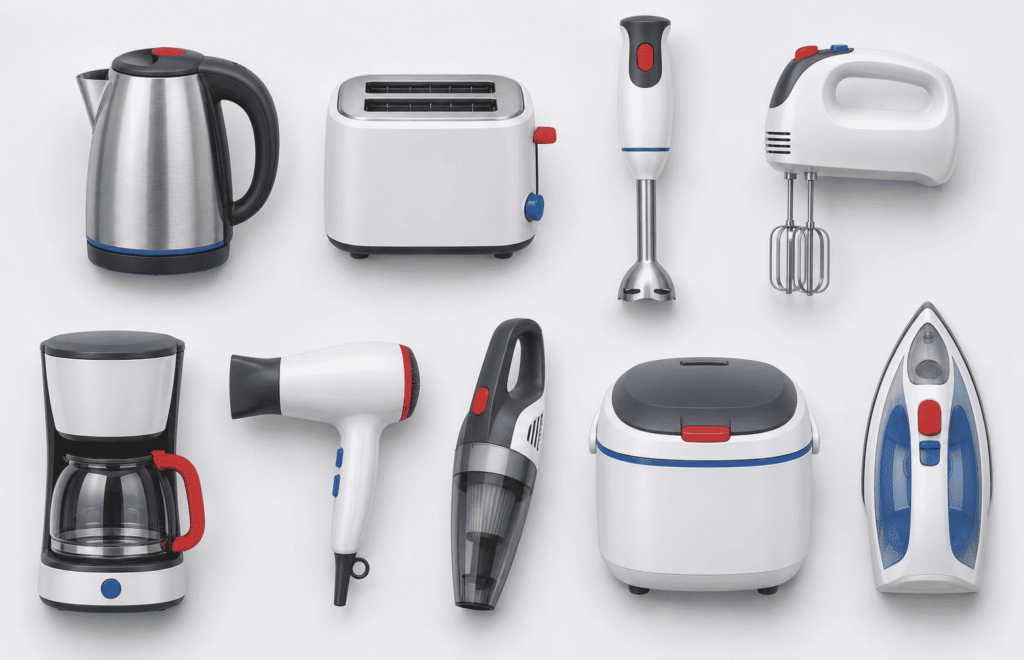
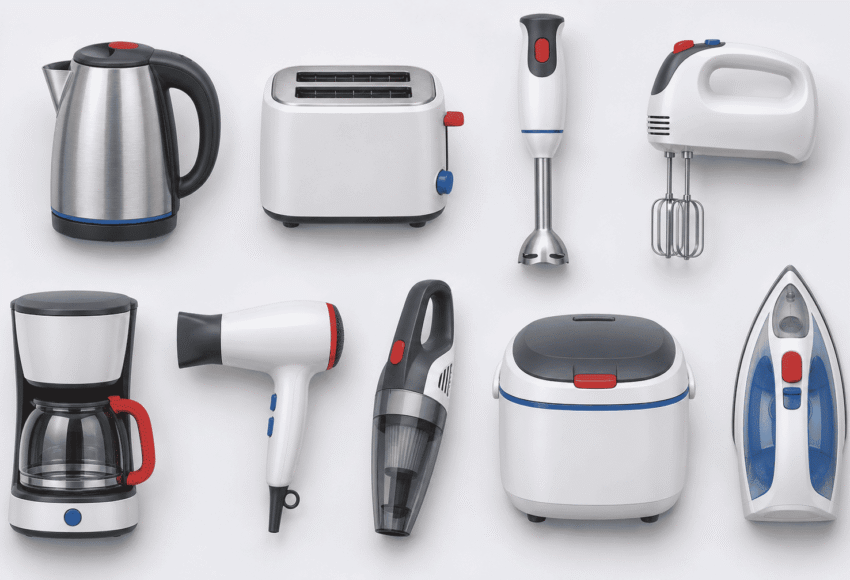
Products such as electric kettles, coffee machines, blenders, vacuum cleaners, hair dryers, and other household appliances may follow different conformity assessment procedures based on their electrical specifications, construction, and intended use.
For Korean importers, retailers, and brands sourcing from Chinese manufacturers, regulatory compliance must be considered alongside production quality. Changes to electrical components, inconsistent manufacturing specifications, incorrect labels, or functional defects can affect the conformity of finished products.
Third-party quality inspections in China help buyers verify product workmanship, functionality, packaging, labeling, and consistency with approved specifications before shipment to South Korea.
South Korea’s Import Requirements for Small Electrical Appliances
Electrical appliances imported into South Korea are subject to product-specific safety and conformity assessment requirements.
The principal product safety framework is established under South Korea’s Electrical Appliances and Consumer Products Safety Control Act.
The Korean Agency for Technology and Standards (KATS) oversees the relevant product safety framework, while designated certification bodies and testing organizations carry out applicable conformity assessment activities.
Depending on the product classification, an electrical appliance may fall under one of three safety management routes:
- Safety Certification
- Safety Confirmation
- Supplier’s Declaration of Conformity
Additional requirements may apply under the Radio Waves Act and relevant energy efficiency regulations.
For products manufactured in China, the applicable regulatory requirements should be identified before mass production begins.
A product that has already been tested or certified for another international market may still require Korean-specific assessment, documentation, or approval.
Which Small Electrical Appliances Require KC Certification?
The applicable KC safety procedure depends on the product’s regulatory classification.
Common household electrical appliances that may fall within Korean safety management requirements include:
- Electric kettles and liquid-heating appliances
- Coffee makers and coffee machines
- Blenders and food processors
- Vacuum cleaners
- Hair dryers and personal care appliances
- Electric irons
- Electric fans
- Portable electric heaters
- Microwave ovens
- Other household electrical appliances
The product’s commercial name alone is insufficient to determine its certification route.
Classification may depend on:
- Rated voltage and frequency
- Power consumption
- Heating elements
- Motor configuration
- Power supply method
- Battery and charger specifications
- Intended household or commercial use
- Wireless communication functions
- Product construction and safety characteristics
Importers should confirm the applicable product classification using current information from KATS and the Safety Korea Product Safety Information Center.
KC Certification Requirements for Electrical Appliances Imported from China
The KC mark is used across several Korean conformity assessment systems.
For electrical appliances, the relevant safety management route determines the required assessment and documentation.
| Safety Management Route | General Requirements | Factory Assessment |
| Safety Certification | Product testing and certification by an authorized body | Initial and follow-up factory assessments may apply |
| Safety Confirmation | Product testing and filing under the applicable procedure | Regular certification-body factory assessment generally does not apply |
| Supplier’s Declaration of Conformity | Applicable conformity evaluation and retention of supporting records | No routine certification-body factory assessment under the standard route |
Safety Certification
Safety Certification applies to designated electrical appliances subject to a higher level of safety control.
The process generally involves:
- Identifying the applicable product category
- Preparing technical documentation
- Submitting representative product samples
- Testing against relevant Korean safety standards
- Completing the required factory assessment
- Obtaining the applicable safety certificate
- Maintaining conformity through required follow-up controls
Where factory assessment is required, the Chinese manufacturing facility may be evaluated as part of the certification process.
The assessment may examine the manufacturer’s production controls, inspection procedures, testing equipment, critical components, and quality records.
Safety Confirmation
Safety Confirmation applies to designated electrical appliances that require testing and filing under the relevant Korean procedure.
The process generally involves product testing, preparation of supporting documentation, and completion of the required filing.
Korean importers should verify that the filing information corresponds to the product model and configuration intended for sale.
Supplier’s Declaration of Conformity
Under this route, the responsible manufacturer or importer evaluates conformity with applicable safety requirements and maintains the required supporting evidence.
Documentation may include:
- Product specifications
- Test reports
- Circuit diagrams
- Component information
- Product photographs
- Rating labels
- User instructions
- Other relevant conformity records
The applicable legal requirements determine the documentation, marking, and record retention obligations.
Korean Electrical Safety Standards for Small Appliances
Many household and similar electrical appliances are evaluated against applicable standards within the KC 60335 series.
These standards address safety risks associated with electrical appliances and their construction.
KC 60335-1: General Safety Requirements
KC 60335-1 establishes general safety requirements for household and similar electrical appliances.
Depending on the product and applicable requirements, assessments may address:
- Protection against electric shock
- Power input and current
- Heating and temperature rise
- Leakage current and electric strength
- Moisture resistance
- Abnormal operation
- Mechanical stability
- Internal wiring
- Electrical connections
- Earthing arrangements
- Supply cords
- Components
- Insulation
- Resistance to heat and fire
The applicable edition and Korean requirements should be confirmed during the certification process.
Product-Specific Safety Standards
General electrical safety requirements are commonly applied together with relevant product-specific standards.
For example, different requirements may apply to liquid-heating appliances, vacuum cleaners, kitchen machines, hair care appliances, and electric heaters.
These standards address hazards associated with the product’s particular function and construction.
A coffee machine and a vacuum cleaner may therefore require different safety evaluations, even when both are manufactured by the same supplier.
Why Product Specifications Matter
Korean importers should ensure that the Chinese manufacturer understands the approved product configuration.
Important specifications may include:
- Rated voltage and frequency
- Rated power
- Plug and supply cord
- Motor
- Heating element
- Thermostat
- Thermal cut-off
- Fuse
- Power supply
- Internal wiring
- Printed circuit board
- Enclosure material
- Battery and charger
- Safety-related components
The final production configuration should remain consistent with the approved technical documentation.
Changes affecting safety-related components may require review by the relevant certification body and, where applicable, additional assessment.
KC Certification and Chinese Manufacturer Responsibilities
When purchasing electrical appliances from China, Korean importers should establish clear responsibilities for certification, manufacturing, and technical documentation.
The factory may provide product samples and technical information, while the importer or other designated applicant handles the applicable Korean conformity procedures.
The exact allocation of responsibilities depends on the regulatory route and commercial arrangement.
Confirm the Manufacturer and Factory Details
Before placing an order, buyers should verify:
- Manufacturer’s legal name
- Production factory location
- Product model identification
- Available certification records
- Manufacturing capabilities
- Quality management procedures
- Critical component suppliers
Where certification includes factory assessment, the manufacturing location must correspond to the relevant approval records.
Verify Existing KC Certificates
Some Chinese manufacturers may already produce appliances for Korean customers.
However, the existence of a KC certificate should be checked carefully.
Importers should confirm:
- Certificate or filing number
- Product name
- Approved model numbers
- Manufacturer information
- Factory details
- Electrical ratings
- Applicable standards
- Certificate validity or current status
- Relevant product configuration
An approval associated with another model or manufacturer should not automatically be treated as covering a new product.
Confirm Product Changes Before Production
Changes to product construction can affect the validity or applicability of existing conformity documentation.
Examples include:
- Replacing a power cord
- Changing the plug
- Using a different heating element
- Substituting a thermostat
- Changing a motor
- Modifying the printed circuit board
- Replacing an enclosure material
- Changing a charger or power supply
Korean buyers should establish a process requiring supplier notification and approval before specified components or manufacturing details are changed.
EMC and Radio Requirements for Imported Electrical Appliances
Certain electrical and electronic appliances may also require conformity assessment under South Korea’s Radio Waves Act.
The National Radio Research Agency (RRA) administers the relevant conformity assessment system.
Depending on the product, requirements may address:
- Electromagnetic emissions
- Electromagnetic immunity
- Radio frequency performance
- Wireless communication functions
- Applicable technical standards
EMC Requirements
Electrical appliances containing motors, electronic control circuits, switching power supplies, or other electronic components may fall within applicable electromagnetic compatibility requirements.
Examples can include:
- Electronic coffee machines
- Vacuum cleaners
- Blenders with electronic controls
- Smart household appliances
- Electrically controlled heaters
The applicable assessment route depends on the product’s classification.
Wireless and Smart Appliances
Small electrical appliances increasingly incorporate wireless features such as Wi-Fi or Bluetooth.
Where these functions are present, additional radio conformity requirements may apply.
For example, a smart coffee machine with Wi-Fi connectivity may require an assessment of its radio functions in addition to the applicable electrical safety requirements.
Importers should verify the complete product configuration, including wireless modules and firmware where relevant.
Official information is available through the National Radio Research Agency.
Energy Efficiency Requirements in South Korea
Certain electrical appliances are subject to energy efficiency or standby power requirements administered by the Korea Energy Agency.
Relevant programs may include:
- Energy Efficiency Labeling and Standards Program
- High-Efficiency Appliance Certification Program
- Standby Power Reduction Program
Depending on the product category, applicable obligations may involve:
- Energy performance testing
- Minimum efficiency requirements
- Product registration
- Energy efficiency labeling
- Standby power requirements
- Additional prescribed markings
Product coverage depends on the current regulatory lists and technical requirements.
Korean importers should verify whether their appliance falls within a designated category before arranging testing or finalizing packaging.
Further information is available from the Korea Energy Agency.
Korean Labeling Requirements for Electrical Appliances
Product labeling is an important part of preparing electrical appliances manufactured in China for the South Korean market.
Depending on the applicable regulations and product classification, required information may include:
- KC mark
- Safety certification or filing number
- RRA conformity identification
- Product name
- Model number
- Rated voltage
- Rated frequency
- Rated power or current
- Manufacturer information
- Importer or responsible-party information
- Country of manufacture
- Production identification
- Applicable safety warnings
- Energy efficiency information, where required
The required format and placement depend on the relevant regulatory provisions.
Verify Korean Labels Before Mass Printing
A common sourcing risk arises when packaging and rating labels are finalized before certification information has been confirmed.
This can result in incorrect model numbers, electrical ratings, or conformity identification.
Before approving mass printing, buyers should compare label artwork with the applicable approval documents.
The information should remain consistent across:
- Product rating label
- Retail packaging
- Korean user manual
- Certification documents
- Purchase specifications
Korean User Manuals and Safety Instructions
Imported appliances may require Korean-language instructions and safety information.
Depending on the product, manuals may address:
- Intended use
- Installation
- Operating instructions
- Cleaning and maintenance
- Electrical safety precautions
- Hot-surface warnings
- Water-contact restrictions
- Battery and charging instructions
- Child-safety precautions
- Troubleshooting
- Disposal information
- Relevant service or importer contact details
Instructions should correspond to the actual product configuration supplied to the Korean market.
How to Import Small Electrical Appliances from China to South Korea
A structured sourcing and conformity process helps Korean buyers manage regulatory and production requirements.
Step 1: Identify the Product and Applicable Regulations
Before placing a bulk order, confirm the appliance’s intended use, electrical specifications, construction, and regulatory classification.
Determine whether the product requires:
- KC Safety Certification
- Safety Confirmation
- Supplier’s Declaration of Conformity
- RRA conformity assessment
- Energy efficiency evaluation
- Korean labeling and instructions
The final product configuration should be used for this assessment.
Step 2: Evaluate the Chinese Supplier
Assess whether the manufacturer can produce the appliance according to the approved specifications.
Relevant checks may include:
- Factory manufacturing capabilities
- Production equipment
- Quality management procedures
- Component purchasing controls
- Incoming material inspection
- Production testing
- Traceability
- Previous experience with Korean market requirements
A factory audit in China can provide additional information about the supplier’s production systems and quality controls.
Step 3: Confirm Product Specifications and Components
Prepare a clear product specification identifying:
- Product model
- Electrical ratings
- Functional requirements
- Approved materials
- Critical components
- Plug and power cord
- Accessories
- Labeling
- Packaging
- Inspection acceptance criteria
The supplier should confirm these requirements before production.
Step 4: Prepare Certification Samples and Documents
Representative samples should correspond to the final configuration intended for South Korea.
Technical documentation may include:
- Product specifications
- Circuit diagrams
- Bill of materials
- Critical component list
- Component certificates
- Product photographs
- Rating label artwork
- Korean user manual
- Factory information
- Existing test reports, where applicable
Existing IEC or CB reports may support the assessment where accepted by the relevant Korean body.
Additional Korean testing or documentation may still be required.
Step 5: Complete Applicable Testing and Certification
Submit the required samples and documentation through the appropriate conformity assessment route.
Where testing identifies nonconformities, the manufacturer may need to modify the product and submit additional evidence or samples.
Any design changes should be reviewed for their effect on other applicable approvals.
Step 6: Approve the Final Production Configuration
After the necessary approvals are completed, confirm the final product specifications with the Chinese manufacturer.
This includes the approved electrical components, construction, model numbers, labels, and instructions.
The factory should have procedures to control changes affecting the approved configuration.
Step 7: Monitor Mass Production
Production monitoring helps identify defects and specification deviations before large quantities are completed.
For Korean buyers sourcing from China, quality inspections may be arranged at different manufacturing stages.
Step 8: Conduct Pre-Shipment Inspection
Before shipment, verify that finished products meet the agreed purchasing requirements.
A pre-shipment inspection can evaluate:
- Product appearance
- Functionality
- Workmanship
- Dimensions
- Accessories
- Packaging
- Labeling
- Quantity
- Consistency with approved reference specifications
The inspection scope should be agreed upon before the inspection takes place.
Quality Control for Small Electrical Appliances Manufactured in China
Quality control inspections in China help Korean importers identify manufacturing defects, production inconsistencies, and shipment preparation problems.
Inspection planning should reflect the product’s complexity, supplier performance, production schedule, and purchasing requirements.
Pre-Production Inspection (PPI)
A Pre-Production Inspection takes place before mass production begins.
It may involve verifying:
- Raw materials
- Available components
- Product specifications
- Approved reference samples
- Packaging materials
- Production preparation
- Relevant purchase order requirements
For electrical appliances, this stage can be useful for identifying incorrect components or specification discrepancies before manufacturing begins.
During Production Inspection (DUPRO)
A During Production Inspection evaluates products while manufacturing is underway.
It can help buyers identify defects and production inconsistencies before the full order is completed.
Typical checks may include:
- Assembly workmanship
- Product dimensions
- Functional performance
- Visible component consistency
- Production defects
- Labeling
- Packaging preparation
When problems are identified early, the supplier may have more opportunity to investigate and implement corrective actions during production.
Pre-Shipment Inspection (PSI)
A Pre-Shipment Inspection in China is generally conducted when production is substantially complete and goods are available for inspection.
It verifies selected finished products against the agreed specifications and inspection criteria.
For small electrical appliances intended for South Korea, a PSI may include:
- Product identity verification
- Workmanship inspection
- Functional checks
- Dimensional measurements
- Visible electrical component checks
- Label verification
- Packaging inspection
- Quantity verification
Sampling inspections may use an agreed Acceptance Quality Limit (AQL) plan.
Inspection results should be interpreted according to the specified sampling plan and defect classification criteria.
Container Loading Supervision (CLS)
Container Loading Supervision takes place during loading.
It may include checking:
- Product and carton identification
- Shipping quantities
- Carton condition
- Container condition
- Loading arrangements
- Shipping marks
- Container sealing
This service can support shipment verification after production inspection has been completed.
Pre-Shipment Inspection Checklist for Electrical Appliances Exported from China to Korea
A pre-shipment inspection checklist should reflect the product type, approved specifications, and applicable buyer requirements.
Product Identification
Verify:
- Product name
- Model number
- Product version
- Color
- Electrical ratings shown on the product
- Accessories
- Order quantity
- Approved reference specifications
Appearance and Workmanship
Check for:
- Scratches and stains
- Cracked or damaged housings
- Poor assembly
- Uneven gaps
- Loose components
- Sharp edges
- Damaged controls
- Incorrect printing
- Visible wiring defects
Functional Performance
Depending on the appliance, functional checks may include:
- Power-on operation
- Buttons and switches
- Motor operation
- Heating functions
- Speed settings
- Indicator lights
- Displays
- Timers
- Automatic shut-off
- Charging functions
- Unusual noise or vibration
Functional checks should follow the agreed inspection procedure and available on-site conditions.
Electrical Components
Where accessible within the inspection scope, inspectors may check:
- Plug type
- Supply cord
- Adapter or charger
- Connectors
- Switches
- Battery compartment
- Visible component identification
- Consistency with approved samples
Internal construction checks requiring product disassembly should be specifically included in the inspection agreement.
Korean Labels and Documentation
Verify:
- KC marking where required
- Applicable certification or registration number
- Model identification
- Rated voltage and frequency
- Manufacturer information
- Importer information where required
- Country of origin
- Korean-language instructions
- Required warning statements
- Barcode and product identification
Inspectors can compare visible markings with approved documents supplied for the inspection.
A pre-shipment inspection does not independently establish the legal validity of a KC certificate or replace formal conformity assessment.
Packaging and Shipment Preparation
Check:
- Retail packaging condition
- Product protection
- Included accessories
- User manuals
- Carton quantity
- Shipping marks
- Barcode readability
- Carton dimensions
- Gross weight
- Packaging consistency
Additional packaging checks may be performed where specified.
Common Quality and Compliance Problems When Importing Appliances from China
Korean importers may encounter several problems when working with overseas manufacturers.
Production Components Differ From Approved Samples
A manufacturer may replace components because of availability, cost, or purchasing changes.
Safety-related substitutions can affect the approved product configuration.
Buyers should require notification and review of relevant component changes.
Incorrect KC Marking or Registration Information
Labels may contain incorrect approval numbers, model names, or electrical ratings.
Such discrepancies can create compliance concerns and require correction.
Label artwork should be verified before mass printing.
Incomplete Korean User Instructions
Missing or inconsistent instructions can delay product preparation for the Korean market.
The manual should correspond to the supplied product and applicable requirements.
Functional Defects During Mass Production
Products that perform satisfactorily during sample evaluation may develop defects during large-scale manufacturing.
Examples include:
- Heating failures
- Motor problems
- Defective switches
- Loose electrical connections
- Incorrect assembly
- Unstable controls
- Damaged accessories
Production monitoring and pre-shipment inspection can help identify these issues.
Inconsistent Product Models and Documents
Model identification may differ between the purchase order, rating label, user manual, packaging, and conformity documents.
A consistent model identification system helps reduce confusion during production and shipment preparation.
Inadequate Supplier Quality Controls
Weak incoming material controls, inconsistent production procedures, and incomplete inspection records can increase manufacturing risks.
Supplier evaluations and factory audits can help buyers assess these controls before committing to substantial orders.
How Korean Importers Can Reduce Quality Risks When Sourcing from China
Effective sourcing controls begin before the first production order.
Establish Detailed Purchase Specifications
Purchase specifications should identify the product configuration, functional requirements, approved components, labeling, packaging, and quality acceptance criteria.
Clear specifications provide a consistent reference for the manufacturer and inspection team.
Verify Suppliers Before Placing Large Orders
Supplier evaluation may include reviewing manufacturing capabilities, quality procedures, available records, and previous production experience.
For Korean businesses sourcing electrical appliances from Chinese manufacturers, working with a China inspection company for Korean importers can help coordinate supplier audits, production inspections, and pre-shipment quality checks before goods are exported to South Korea.
Control Changes to Approved Components
Require suppliers to notify the buyer before changing specified components, materials, or production methods.
Changes affecting product conformity should be reviewed through the appropriate technical and regulatory process.
Arrange Inspections at Appropriate Production Stages
The inspection schedule should reflect product complexity and supplier risk.
For new suppliers or products with previous quality problems, inspections during production may provide useful early findings.
Pre-shipment inspection helps verify the finished goods before release.
Review Inspection Findings Before Shipment
Inspection reports should be reviewed against the agreed quality requirements.
Where defects are identified, buyers should determine whether correction, additional verification, or reinspection is necessary.
Shipment decisions should consider both product inspection findings and the applicable regulatory documentation.
Checklist for Importing Small Electrical Appliances from China to South Korea
Before shipment, Korean importers should confirm the following items.
| Area | Verification |
| Product classification | Applicable Korean regulatory category identified |
| KC safety requirements | Correct safety management route confirmed |
| Safety standards | Relevant Korean standards identified |
| Product testing | Required safety testing completed |
| Factory assessment | Completed where applicable |
| KC documentation | Required certificate, filing, or records available |
| EMC and radio | Applicable RRA conformity requirements addressed |
| Energy efficiency | Applicable requirements checked |
| Manufacturer | Factory and manufacturer details verified |
| Product specifications | Approved production configuration confirmed |
| Critical components | Production components consistent with approved specifications |
| Korean labels | Required markings and information checked |
| User manual | Korean instructions prepared as applicable |
| Production quality | Inspection requirements completed |
| Packaging | Product and shipment information verified |
| Shipment records | Relevant documents retained |
The checklist should be adapted to the specific product and applicable regulatory requirements.
Importing small electrical appliances from China to South Korea requires accurate product classification, applicable conformity assessment, and consistent manufacturing controls. Korean buyers should confirm regulatory requirements before production, maintain approved product specifications, and verify finished goods through appropriate quality inspections before shipment.

 Request Free Sample Report