

Yield Strength vs Tensile Strength: What’s the Difference?
Yield strength and tensile strength are two of the most important mechanical properties used to evaluate metals and other engineering materials. Although these terms are often mentioned together, they describe different stages of a material’s behavior when subjected to a tensile load.
What is Yield Strength?
Yield strength is the amount of stress a material can withstand before it begins to deform permanently.
Before reaching the yield point, a material will return to its original shape after the applied load is removed. Once the yield strength is exceeded, permanent deformation occurs, even if the load is no longer applied.
Yield strength is particularly important for products that must maintain their shape during normal service.
Common examples include:
- Structural steel
- Automotive components
- Pressure vessels
- Fasteners
- Machinery parts
Engineers often use yield strength when determining the maximum allowable working load for a product.
What is Tensile Strength?
Tensile strength, also known as Ultimate Tensile Strength (UTS), is the maximum stress a material can withstand before it begins to fracture.
As the applied load increases beyond the yield point, the material continues to deform until it reaches its maximum load-bearing capacity. After this point, the material begins to neck and eventually breaks.
Ultimate tensile strength represents the highest stress recorded during a tensile test.
Yield Strength vs Tensile Strength
| Property | Yield Strength | Tensile Strength |
| Definition | Stress at which permanent deformation begins | Maximum stress before fracture |
| Occurs During Test | Before significant plastic deformation | Near the end of the tensile test |
| Material Behavior | Material permanently changes shape | Material reaches maximum load capacity |
| Primary Purpose | Design and structural safety | Material performance evaluation |
| Typical Symbol | YS or Re | UTS or Rm |
Both properties are measured during the same tensile test but describe different stages of material behavior.
How Are They Measured?
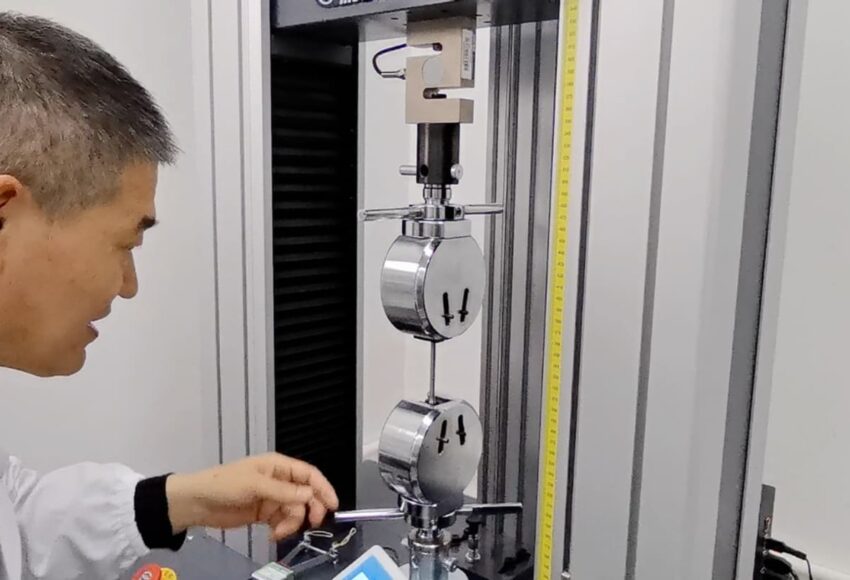
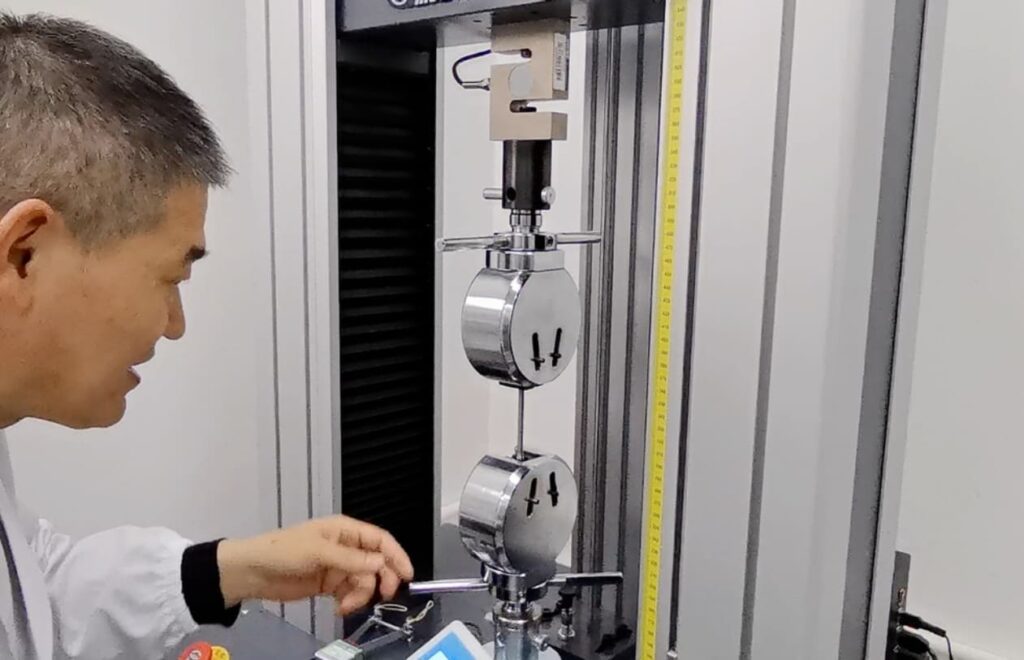
Yield strength and tensile strength are determined using a universal testing machine (UTM).
During testing:
- A standardized specimen is prepared.
- The specimen is secured in the testing machine.
- Tensile force is applied at a controlled rate.
- Load and elongation are continuously recorded.
- A stress-strain curve is generated.
- Yield strength and ultimate tensile strength are calculated from the test data.
Common testing standards include:
- ASTM E8/E8M
- ISO 6892-1
- ASTM D638 (plastics)
Understanding the Stress-Strain Curve
A tensile test produces a stress-strain curve that illustrates how a material behaves under increasing load.
The curve generally includes:
- Elastic region
- Yield point
- Plastic deformation
- Ultimate tensile strength
- Necking
- Fracture
Yield strength marks the transition from elastic deformation to permanent deformation, while tensile strength represents the highest point on the curve before failure begins.
Why Are Both Properties Important?
Although related, yield strength and tensile strength serve different engineering purposes.
Yield strength is important because it helps:
- Prevent permanent deformation
- Determine safe operating loads
- Support structural design
- Improve product reliability
Tensile strength is important because it helps:
- Evaluate overall material strength
- Compare material grades
- Verify manufacturing quality
- Confirm compliance with specifications
Most engineering applications consider both values during material selection.
Factors That Affect Yield and Tensile Strength
Several factors influence these mechanical properties.
Material composition
Different alloys have different strength characteristics.
Heat treatment
Processes such as quenching and tempering can significantly increase strength.
Manufacturing process
Rolling, forging, casting, and welding may affect mechanical performance.
Grain structure
Smaller grain sizes generally improve strength.
Temperature
Mechanical properties can change under high or low operating temperatures.
Typical Applications
Yield strength is commonly prioritized for:
- Structural beams
- Bridges
- Building frames
- Pressure equipment
- Heavy machinery
Tensile strength is commonly evaluated for:
- Fasteners
- Steel wire
- Cables
- Springs
- Automotive components
- Consumer products
Many industries specify minimum values for both properties.
Common Misconceptions
Higher tensile strength always means a better material.
Not necessarily. A material with extremely high tensile strength may have lower ductility, making it less suitable for applications requiring flexibility or impact resistance.
Yield strength and tensile strength are the same.
No. Yield strength indicates when permanent deformation begins, while tensile strength represents the maximum stress the material can withstand before fracture.
Only tensile strength matters during quality inspection.
Most material specifications require evaluation of multiple mechanical properties, including yield strength, tensile strength, elongation, and hardness.
Why These Properties Matter in Quality Control
Mechanical testing helps manufacturers verify that materials meet customer specifications and applicable standards.
Quality control teams use yield strength and tensile strength data to:
- Verify incoming raw materials
- Monitor production consistency
- Validate heat treatment processes
- Support product certification
- Reduce the risk of product failure
Regular tensile testing provides objective data that supports supplier qualification and product quality assurance.
Yield strength and tensile strength are complementary mechanical properties measured during the same tensile test. Yield strength indicates the point at which permanent deformation begins, while tensile strength represents the maximum stress a material can withstand before fracture.
Understanding the difference helps manufacturers select appropriate materials, interpret tensile test reports accurately, and ensure products meet engineering, customer, and regulatory requirements. Together with other mechanical properties, these values play a critical role in product quality, safety, and long-term performance.
Related Article:
- Tensile Strength Testing Explained
- Fatigue Testing of Materials
- Hardness Testing
- Rockwell vs Vickers Hardness Testing
- Top 6 Mechanical Tests for Furniture Durability Certification
Frequently Asked Questions
1. What is the difference between yield strength and tensile strength?
Yield strength is the stress at which permanent deformation begins. Tensile strength is the maximum stress a material can withstand before fracture.
2. Which is more important, yield strength or tensile strength?
Neither property is universally more important. The required property depends on the product’s design, application, and performance requirements.
3. Are yield strength and tensile strength measured in the same test?
Yes. Both values are obtained during a standard tensile test using a universal testing machine.
4. Can a material have high tensile strength but low yield strength?
Yes. Different materials exhibit different stress-strain behavior, so the relationship between yield strength and tensile strength can vary.
5. What standards are commonly used for tensile testing?
Common standards include ASTM E8/E8M for metals, ISO 6892-1 for metallic materials, and ASTM D638 for plastics.

 Request Free Sample Report