

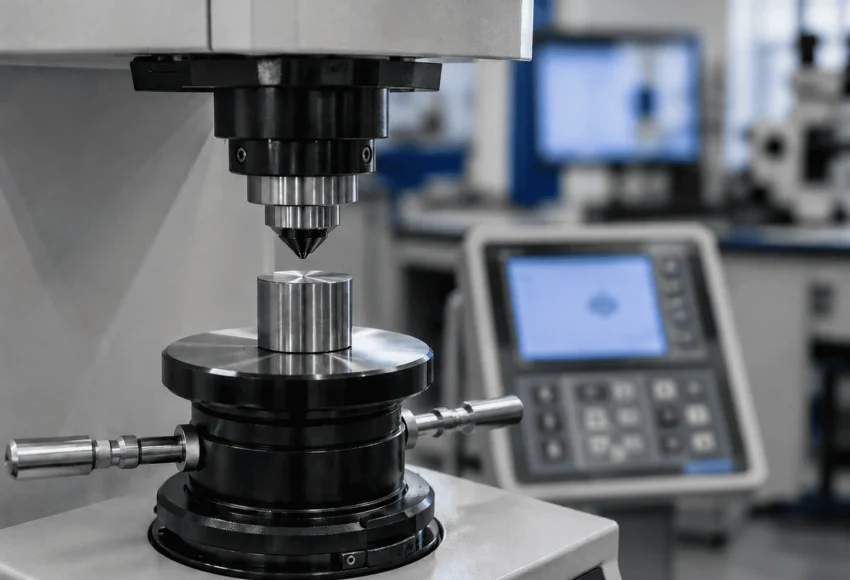
Rockwell vs Vickers Hardness Testing
Hardness testing is used to evaluate a material’s resistance to indentation, deformation, and wear under controlled force. In metal manufacturing and quality control, two of the most widely used methods are Rockwell hardness testing and Vickers hardness testing. Each method applies force differently, uses different indenter designs, and serves different industrial applications.
Selecting the correct hardness testing method is important for ensuring accurate measurement, reliable quality control, and compliance with customer or regulatory requirements.
What Is Hardness Testing
Hardness testing measures how resistant a material surface is to permanent deformation when subjected to mechanical force. The results help manufacturers evaluate:
- Material strength and durability
- Heat treatment effectiveness
- Wear resistance
- Surface integrity
- Production consistency
Hardness testing is commonly used for metals, alloys, coatings, and treated surfaces across industrial manufacturing environments.
What Is Rockwell Hardness Testing
Rockwell hardness testing determines hardness by measuring the depth of penetration created by an indenter under a major load.
The method is widely used because it is:
- Fast
- Direct-reading
- Suitable for production environments
- Effective for medium to hard metals
Rockwell testing uses either:
- A diamond cone indenter
- Steel or carbide ball indenters
Different Rockwell scales are applied depending on material type and hardness range.
Common Rockwell Hardness Scales
HRC Scale
The Rockwell C scale uses a diamond cone indenter and is commonly applied to:
- Hardened steel
- Heat-treated components
- Tool steels
HRB Scale
The Rockwell B scale uses a ball indenter and is commonly used for:
- Copper alloys
- Aluminum alloys
- Softer metals
HRA Scale
The Rockwell A scale is applied to:
- Thin materials
- Cemented carbides
- Surface-hardened components
Rockwell Hardness Testing Standards
ISO 6508-1
ISO 6508-1 defines Rockwell hardness testing procedures for metallic materials, including:
- Test force requirements
- Indenter specifications
- Scale selection
- Result calculation
This standard is widely used in international manufacturing and compliance verification.
ASTM E18
ASTM E18 is the primary North American standard for Rockwell hardness testing. It specifies:
- Equipment calibration
- Indentation procedures
- Hardness scale requirements
- Verification methods
This standard is commonly required in engineering and industrial supply chains serving the United States market.
GB/T 230.1
GB/T 230.1 is the Chinese national standard for Rockwell hardness testing of metallic materials and is widely applied within domestic manufacturing and compliance environments.
What Is Vickers Hardness Testing
Vickers hardness testing measures hardness by evaluating the size of an indentation created by a diamond pyramid indenter under controlled force.
Unlike Rockwell testing, Vickers testing calculates hardness based on the indentation surface area rather than penetration depth.
This method is known for:
- High precision
- Wide load range flexibility
- Suitability for microhardness testing
- Capability to test thin materials and coatings
Common Vickers Hardness Testing Applications
Vickers testing is widely used for:
- Thin metal sheets
- Surface coatings
- Electroplated components
- Small precision parts
- Heat-affected zones
- Weld inspections
Because the indentation is very small, Vickers testing is highly suitable for detailed material analysis.
Vickers Hardness Testing Standards
ISO 6507-1
ISO 6507-1 defines Vickers hardness testing procedures for metallic materials, including:
- Test force selection
- Diamond pyramid indenter requirements
- Indentation measurement methods
- Hardness calculation procedures
This standard supports both macro and microhardness testing applications.
ASTM E384
ASTM E384 is commonly used for microhardness testing using Vickers and Knoop methods. It specifies:
- Low-force testing procedures
- Indentation measurement requirements
- Equipment verification and calibration
This standard is frequently applied in metallurgical laboratories and precision engineering environments.
GB/T 4340.1
GB/T 4340.1 is the Chinese national standard for Vickers hardness testing and is widely used for industrial inspection and product quality verification within China.
Rockwell vs Vickers Hardness Testing: Key Differences
Although both methods evaluate hardness, their testing principles and applications differ significantly.
| Feature | Rockwell Hardness Testing | Vickers Hardness Testing |
| Measurement Method | Depth of penetration | Indentation surface area |
| Indenter Type | Diamond cone or ball | Diamond pyramid |
| Testing Speed | Faster | Slower |
| Precision | Moderate | High |
| Suitable Materials | Medium to hard metals | Thin materials and coatings |
| Surface Damage | Larger indentation | Smaller indentation |
| Production Use | High-volume testing | Laboratory and precision testing |
| Microhardness Capability | Limited | Excellent |
How to Choose Between Rockwell and Vickers Hardness Testing
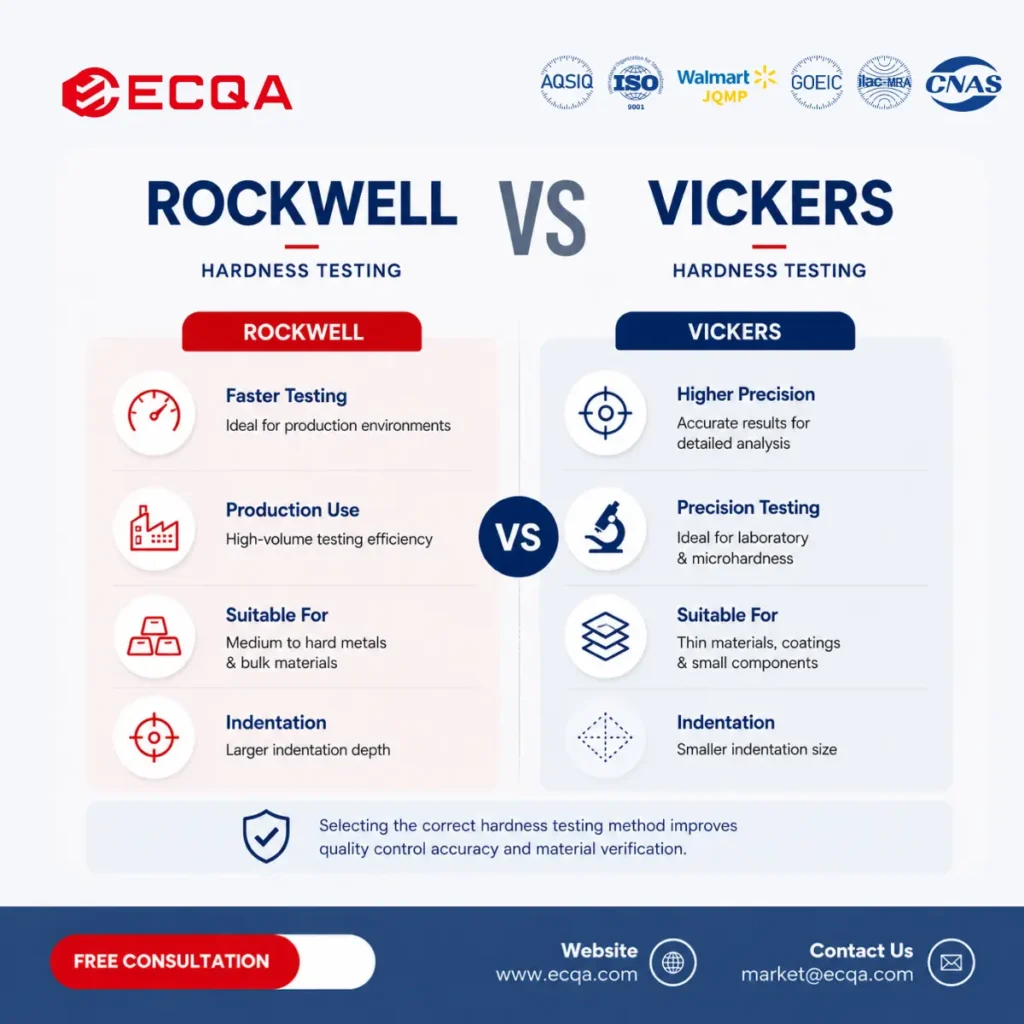
Selecting the appropriate hardness testing method depends on material type, component size, coating thickness, and testing objectives.
Choose Rockwell Hardness Testing When:
- Testing hardened steel or bulk metals
- High production speed is required
- Large components are being evaluated
- Direct-read results are preferred
Choose Vickers Hardness Testing When:
- Testing thin materials or coatings
- High precision is required
- Small components need evaluation
- Microhardness analysis is necessary
Role of Hardness Testing in Quality Control
Hardness testing supports multiple stages of manufacturing and supplier management.
Heat Treatment Verification
Hardness testing confirms whether hardening, tempering, or surface treatment processes achieved the intended material properties.
Supplier Qualification
Buyers use hardness testing data to evaluate supplier consistency and verify compliance with technical specifications.
Production Quality Monitoring
Manufacturers apply hardness testing during in-process and final inspection to detect variations in material performance.
Product Compliance and Documentation
Hardness testing data is frequently required for:
- Technical documentation
- Customer approval
- Material certification
- Regulatory compliance
Factors Affecting Hardness Testing Accuracy
Reliable hardness testing requires controlled procedures and properly calibrated equipment.
Critical factors include:
- Surface preparation quality
- Correct load selection
- Proper indenter condition
- Calibration accuracy
- Operator consistency
- Indentation measurement precision
Improper testing conditions can lead to inaccurate hardness values and inconsistent quality evaluations.
Rockwell and Vickers hardness testing serve different but complementary roles in material evaluation and quality control. Rockwell testing supports fast and efficient hardness verification for production environments, while Vickers testing provides higher precision for thin materials, coatings, and detailed material analysis. Selecting the correct testing method ensures accurate results, reliable product performance, and compliance with industry requirements.

 Request Free Sample Report