
Plush Toy Inspection Checklist
A plush toy inspection checklist is a structured quality control framework used to evaluate stuffed toys for compliance with safety regulations, approved specifications, and workmanship standards prior to shipment. Plush toys are generally classified as children’s products and must comply with applicable toy safety regulations such as EN 71, ASTM F963, ISO 8124, or corresponding national standards depending on the destination market.
Inspection serves two core purposes. First, it verifies compliance with mandatory mechanical, flammability, and chemical safety requirements through physical testing and document review. Second, it confirms that bulk production is consistent with the approved sample in terms of materials, construction, dimensional tolerance, labeling, and packaging configuration. A structured plush toy inspection checklist ensures traceability and reduces regulatory and quality risks before market entry.
1. Product Identity and Documentation Verification
Before physical inspection begins, inspectors must confirm product identity and documentation accuracy.
Model and Specification Verification
- Confirm product name, model number, and SKU
- Verify dimensions and weight against approved specifications
- Record measurements and evaluate deviations within defined tolerance limits
- Verify color, fabric type, and design details against approved sample
- Confirm embroidery position and artwork accuracy
- Check production quantity against packing list
Regulatory Documentation
- Verify availability of valid toy safety test reports
- Confirm laboratory accreditation (ISO/IEC 17025)
- Ensure test scope includes mechanical safety, flammability, and chemical limits
- Verify conformity with applicable destination market standards
- Confirm correct age grading and warning statements
Approved Sample Comparison
Bulk production samples must be compared against the approved golden sample. Inspectors should record any deviations in:
- Fabric texture and composition
- Stuffing density and consistency
- Stitching style and seam finish
- Accessory placement
- Packaging format
All differences must be documented for evaluation.
2. Visual and Workmanship Inspection
Plush toys must meet defined appearance and construction quality standards. Inspection should follow a recognized sampling plan such as ANSI/ASQ Z1.4 (AQL).
Fabric and Surface Quality
- No stains, discoloration, or contamination
- Uniform dye consistency across batch
- No oil marks or visible defects
- No loose fibers or exposed raw edges
- No abnormal odor indicating material contamination
Stitching and Seam Integrity
- Even stitching without skipped stitches
- No open seams or visible gaps
- Reinforced stress points at limbs and attachments
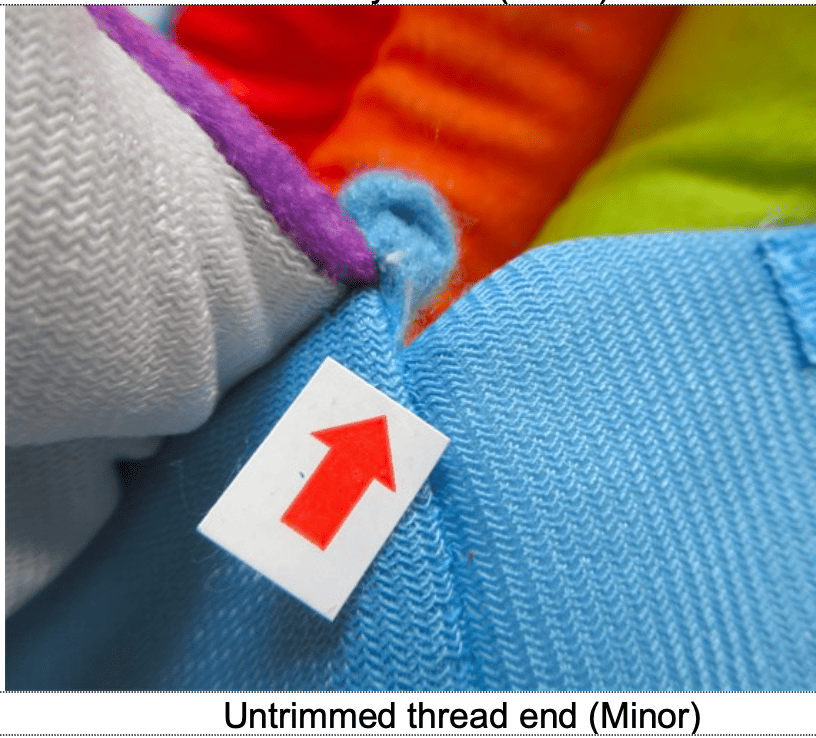
- No loose thread ends
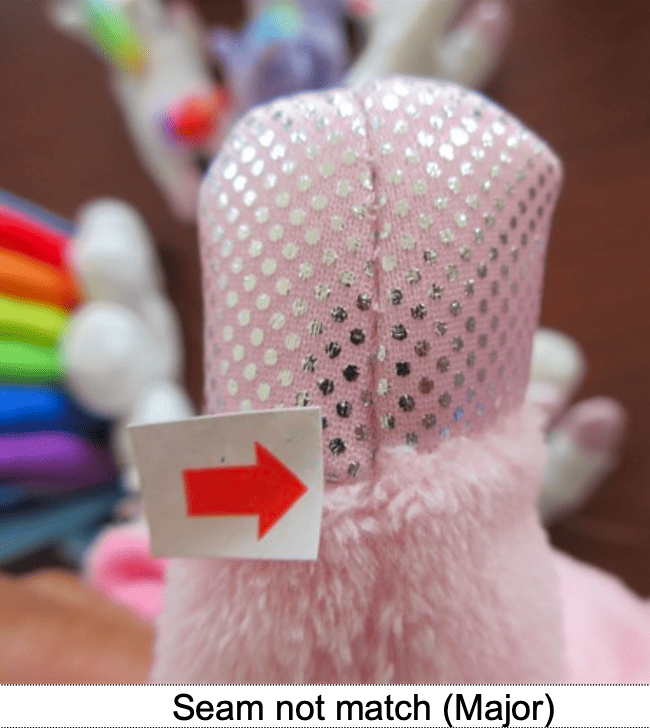
- Seam alignment consistent and not visibly mismatched
- Verification of stitch density (stitches per inch) according to specification
Embroidery and Accessories
- Securely attached embroidered details
- No fading, peeling, or misalignment
- Plastic eyes and noses firmly fixed and resistant to pull
- Decorative elements compliant with small part requirements
Workmanship defects must be categorized as critical, major, or minor according to the agreed AQL criteria.
3. Mechanical and Physical Safety Checks
Mechanical safety checks confirm that the plush toy does not present choking, injury, or structural hazards.
Small Parts Assessment
- Conduct pull test on eyes, buttons, and attachments
- Confirm no detachable small parts under specified force
- Verify compliance with small parts cylinder requirements for toys intended for children under 3 years
Seam Strength and Filling Containment
- Apply seam tension test
- Confirm no seam breakage or stuffing leakage
- Ensure internal filling is evenly distributed
- Verify stitch reinforcement at stress points
Metal Detection and Foreign Object Control
- Perform metal detection test to identify broken needles or metal fragments
- Confirm stuffing is clean and free from foreign objects
- Verify internal material cleanliness
Sharp Points and Edges
- Confirm absence of sharp edges
- Ensure no exposed internal components
Mechanical failures such as detachable small parts or seam rupture are classified as critical defects.
4. Flammability Requirements
Plush toys must comply with applicable flammability standards. Fabric and filling materials must resist ignition within regulated limits.
Inspection should confirm:
- Fabric composition matches tested material
- No unauthorized material substitution
- Documentation supports flammability compliance
Common regulatory references include:
Random verification of textile batches during inspection reduces substitution risks.
5. Chemical Safety Considerations
Although chemical testing is laboratory-based, inspection must confirm production consistency with certified materials.
Material Confirmation
- Fabric matches certified sample
- Dyes and coatings correspond to tested batch
- No unauthorized ink or chemical changes
Chemical safety commonly covers:
- Heavy metals such as lead and cadmium
- Phthalates
- Azo dyes
- Formaldehyde
Inspectors must confirm that valid test reports correspond to the current production lot and model number.
6. Labeling and Age Grading Verification
Plush toys must meet labeling requirements of the destination market.
Required Label Information
- Manufacturer or importer details
- Country of origin
- Batch or production code
- Care instructions
- Age grading
- Mandatory warning statements
Labels must be securely attached, legible, and consistent with regulatory classification. Age grading must not contradict small parts assessment findings.
7. Functionality and Performance Testing (If Applicable)
For plush toys containing electronic components such as sound modules:
Battery Compartment
- Secure screw fastening
- No accessible batteries without tools
- Proper polarity marking
Operational Check
- Stable activation and shutdown
- No overheating
- Consistent performance under repeated use
Electronic plush toys must comply with electrical toy safety requirements in addition to mechanical safety standards.
8. Packaging Inspection
Packaging affects both compliance and product protection.
Carton Inspection
- Carton strength suitable for transport
- No crushing or moisture damage
- Correct shipping marks and barcode verification
Inner Packaging
- Polybags meet thickness requirements
- Suffocation warning printed when required
- No exposed sharp staples
Improper packaging may lead to transit damage or regulatory non-compliance.
9. Sampling Plan and AQL Criteria
Inspection follows an agreed AQL sampling plan based on shipment quantity.
Typical AQL levels:
- Critical defects: 0.0
- Major defects: 2.5
- Minor defects: 4.0
Sample size is determined according to inspection level. Results are categorized as pass, fail, or corrective action required. Not sure what sample size applies to your order? Use our AQL Calculator to instantly determine inspection quantity and acceptance criteria.
10. Final Inspection Reporting
A comprehensive plush toy inspection report should include:
- Inspection date and factory location
- Order quantity and sample size
- Dimensional measurement record
- Defect classification summary
- AQL evaluation result
- Metal detection confirmation
- Photo documentation of findings
- Overall shipment decision
Structured reporting ensures transparency, traceability, and consistent quality control documentation.
A structured plush toy inspection checklist ensures that stuffed toys meet mechanical safety, flammability, chemical, labeling, and packaging requirements prior to shipment. Inspection reduces mechanical hazards such as seam rupture and small part detachment, verifies production consistency, and supports regulatory compliance across markets.
For detailed documentation format and defect classification examples, you may request a sample plush toy inspection report for reference.

 Request Free Sample Report