

Loading Supervision in Mexico
Loading supervision in Mexico is an inspection process conducted during cargo loading to verify shipment accuracy, packaging condition, container suitability, cargo securing methods, and loading practices before export or inland transportation. The objective of loading supervision is to confirm that products are loaded according to approved instructions, shipment requirements, and transport conditions while reducing the risk of cargo movement, packaging damage, quantity discrepancies, or documentation inconsistencies.
Mexico handles substantial cargo movement across industries including automotive, electronics, retail products, industrial equipment, consumer goods, and home products. Cargo commonly moves through major logistics hubs and ports including Manzanillo, Veracruz, Lázaro Cárdenas, and Altamira before continuing through regional distribution networks.
Because shipments may experience long transport routes, multiple handling stages, environmental exposure, and warehouse transfers, loading accuracy and container condition become important factors affecting shipment quality.
Loading supervision helps verify shipment readiness before transport begins.
Why Loading Supervision Matters in Mexico
Cargo handling risks may occur during loading, transport preparation, or container sealing.
Common shipment issues associated with loading conditions include:
- Crushed or deformed cartons
- Moisture exposure inside containers
- Incorrect carton markings or missing labels
- Quantity discrepancies
- Improper pallet arrangement
- Poor cargo stabilization
- Cargo shifting during transit
- Missing or inconsistent seal records
Many of these issues originate during loading and may relate to packaging quality, cargo placement, weight distribution, or container condition.
Loading supervision provides visibility into cargo handling before transport begins by documenting shipment condition, packaging integrity, loading practices, and container readiness.
Key Aspects of Loading Supervision in Mexico
Loading supervision commonly follows a structured inspection process focused on shipment verification, packaging condition, loading stability, and documentation.
Verification of Goods
Inspectors verify whether products correspond with approved shipment information and loading instructions.
Inspection activities commonly include:
- Product type verification
- Quantity confirmation
- SKU verification where applicable
- Assortment review
- Visual condition assessment
Verification helps determine whether goods loaded into containers match packing lists, purchase order information, or shipment instructions.
Packaging and Transport Readiness
Packaging condition directly affects cargo protection during transport.
Inspectors commonly review:
- Carton integrity
- Pallet stability
- Protective materials
- Packaging durability
- Stretch wrapping condition
- Edge protection where applicable
Transport readiness evaluation helps determine whether packaging is suitable for expected shipping conditions.
Long transit routes, container stacking, humidity exposure, and multiple handling stages may increase packaging-related risks.
Container Condition Review
Container condition plays an important role in shipment protection.
Before loading begins, inspectors commonly verify whether containers are:
- Dry and free from moisture
- Structurally suitable
- Clean and free from contamination
- Free from excessive odors or residues
- Functioning properly at doors and locking points
Container inspection helps reduce risks associated with water ingress, contamination, structural damage, or unsuitable transport conditions.
Monitoring of Cargo Loading and Securing
Loading supervision includes observation of cargo placement and stabilization methods.
Inspectors commonly review:
- Cargo positioning
- Weight distribution
- Stacking stability
- Placement of fragile or irregular products
- Cargo separation methods
- Use of securing materials
Where applicable, securing materials may include:
- Straps
- Blocking materials
- Dunnage
- Airbags or cushioning systems
Loading oversight helps support cargo stability and reduce movement during transport.
Seal Verification and Documentation
After loading is completed, container sealing and documentation are commonly verified.
Inspection activities may include:
- Seal number recording
- Photographic evidence collection
- Container closure verification
- Documentation of final loading condition
Seal verification supports shipment traceability and loading visibility.
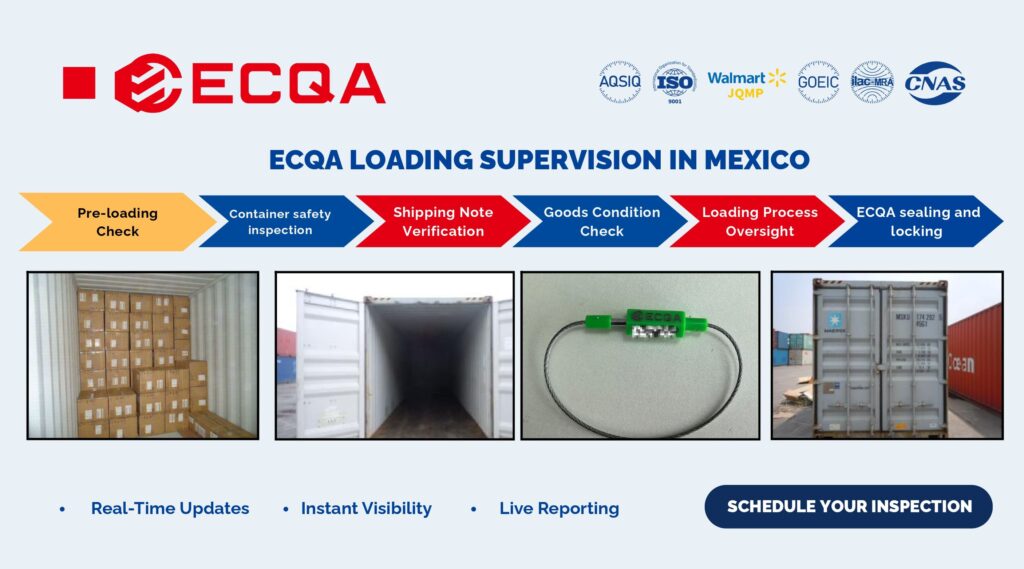
Typical Loading Supervision Process in Mexico
Loading supervision generally follows a structured sequence designed to verify shipment condition and transport readiness.
1. Pre-Loading Review
Before loading begins, inspectors commonly verify:
- Shipment documentation
- Product identification
- Packaging condition
- Carton labeling accuracy
- Quantity readiness
Pre-loading review helps confirm consistency between physical cargo and shipment instructions.
2. Container Condition Inspection
Container condition is evaluated before products enter the container.
Inspection commonly includes:
- Interior cleanliness review
- Moisture inspection
- Structural condition verification
- Door functionality checks
- Floor condition assessment
This stage helps confirm whether the container is suitable for shipment.
3. Loading Oversight
During loading, inspectors monitor cargo handling and arrangement.
Inspection activities commonly include:
- Cargo placement review
- Weight balance observation
- Handling practices monitoring
- Product stacking verification
- Stabilization review
Loading oversight helps reduce cargo instability during transit.
4. Cargo Securing Verification
After cargo placement, inspectors may review stabilization methods.
Inspection may include:
- Strap positioning
- Blocking effectiveness
- Pallet stabilization
- Empty-space management
Cargo securing verification helps reduce movement risk during transportation.
5. Final Sealing and Reporting
Once loading is completed, final inspection activities commonly include:
- Container sealing verification
- Seal number documentation
- Final photographs
- Shipment condition records
- Inspection reporting
Documentation provides traceability and visibility into loading conditions at the point of shipment.
Common Loading Risks Observed in Mexico Shipments
Several loading-related issues may affect shipment quality if cargo handling controls are inconsistent.
Common risks include:
Packaging Failures
- Weak cartons
- Crushed packaging
- Poor pallet stability
- Insufficient protective materials
Quantity and Assortment Errors
- Missing products
- Incorrect SKU assortment
- Quantity discrepancies
- Mixed shipment configuration issues
Container Condition Problems
- Moisture exposure
- Dirty container interiors
- Structural defects
- Damaged flooring
Cargo Securing Issues
- Poor weight distribution
- Cargo instability
- Inadequate blocking or bracing
- Excessive cargo movement risk
Early identification of these risks may help reduce transit damage, shipment discrepancies, and receiving inconsistencies.
Why Third-Party Loading Supervision Matters
Third-party loading supervision provides independent verification of loading conditions before transport begins.
Independent inspectors commonly verify:
- Shipment quantity
- Packaging condition
- Container suitability
- Cargo loading practices
- Seal integrity
- Documentation accuracy
Inspection reports commonly include:
- Quantity findings
- Packaging observations
- Container condition records
- Cargo loading photographs
- Seal verification details
- Inspection conclusions
Independent loading supervision helps improve shipment visibility, traceability, and loading consistency across supply chains.
Loading supervision in Mexico helps verify shipment condition, packaging readiness, container suitability, cargo securing practices, and shipment accuracy before transport begins. A structured loading supervision process supported by packaging review, cargo verification, container inspection, sealing documentation, and loading oversight helps reduce transport-related risks and improve shipment visibility across longer supply chains.

 Request Free Sample Report