

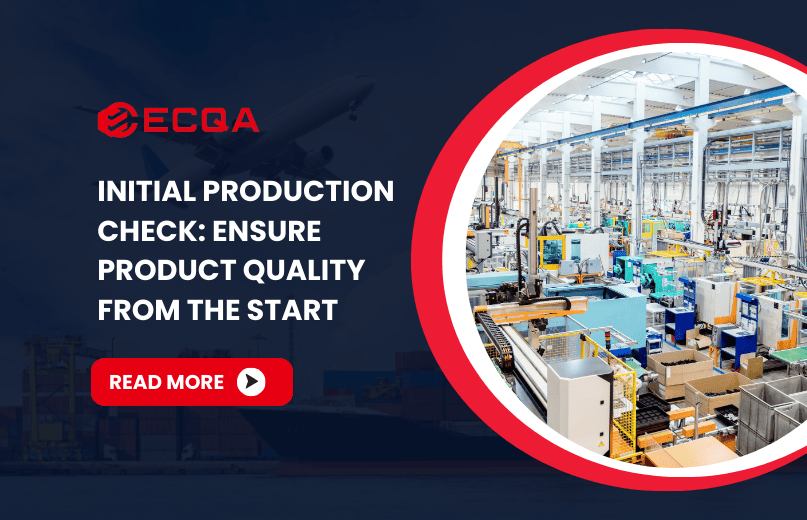
Initial Production Check: Ensure Product Quality from the Start

An Initial Production Check (IPC) is a quality control inspection conducted at the beginning of the production process, typically when 5% to 20% of production has been completed. The purpose of an IPC is to verify that raw materials, components, production processes, and initial finished units conform to approved specifications before mass production continues.
By identifying issues at an early stage, an Initial Production Check helps manufacturers and buyers reduce quality risks, prevent large-scale defects, and improve overall production consistency.
Why Initial Production Checks Are Important
Quality problems discovered during the final stages of production are often expensive and difficult to correct. Once mass production is underway, defects may affect thousands of units, resulting in rework, shipment delays, and additional costs.
An Initial Production Check helps:
- Identify quality issues before full-scale production
- Verify raw materials and components
- Confirm production readiness
- Reduce rework and corrective action costs
- Improve production consistency
- Support on-time delivery schedules
- Minimize quality risks throughout the manufacturing process
By addressing problems early, manufacturers can take corrective actions before defects affect larger production volumes.
When Is an Initial Production Check Conducted?
An IPC is typically scheduled after raw materials and components have arrived and production has started.
The inspection is commonly performed when:
- Production lines are operational
- Initial units have been completed
- Approximately 5% to 20% of the order quantity has been produced
This timing allows inspectors to evaluate actual production output while providing sufficient opportunity for corrective actions if problems are identified.
Initial Production Check vs Other Product Inspections
| Inspection Type | Production Stage | Primary Focus | Objective |
|---|---|---|---|
| Initial Production Check (IPC) | 5%–20% of production | Raw materials, production setup, first units | Identify issues early |
| During Production Inspection (DUPRO) | 20%–80% of production | Production quality and consistency | Monitor ongoing production |
| Pre-Shipment Inspection (PSI) | 80%–100% completed and packed | Finished products | Verify shipment quality before dispatch |
What Does an Initial Production Check Cover?
Raw Materials and Components
Inspectors verify that raw materials and components comply with approved specifications and production requirements.
Typical checks include:
- Material type verification
- Component specification review
- Color and finish verification
- Supplier-approved materials confirmation
- Packaging material verification
Early verification helps prevent incorrect materials from being used throughout production.
Production Setup and Readiness
Production readiness is evaluated before manufacturing progresses further.
Inspectors commonly review:
- Production line setup
- Work instructions
- Production procedures
- Operator readiness
- Quality control checkpoints
These reviews help ensure production begins under controlled conditions.
Machinery and Equipment Verification
Production equipment must be properly configured and maintained.
Inspection activities may include:
- Equipment condition checks
- Tooling verification
- Calibration review
- Machine setup confirmation
- Measurement equipment verification
Improperly configured equipment can contribute to quality inconsistencies throughout production.
First Production Units
The first completed products are inspected to evaluate workmanship, assembly quality, and product conformity.
Common evaluation areas include:
- Product construction
- Assembly quality
- Surface finish
- Dimensions and measurements
- Functional performance
- Visual appearance
Any issues identified at this stage can be corrected before larger quantities are produced.
Product Specifications and Approved Samples
Inspectors compare production output against approved references such as:
- Approved samples
- Technical drawings
- Product specifications
- Purchase order requirements
- Customer requirements
This verification helps ensure production output matches agreed standards.
Packaging and Labeling Verification
Packaging and labeling may also be reviewed during the IPC process.
Typical checks include:
- Packaging materials
- Product labels
- Barcodes
- Shipping marks
- User instructions
- Regulatory markings
Early verification reduces the risk of packaging-related non-conformities later in production.
Common Issues Identified During an Initial Production Check
An IPC often identifies issues that may become more costly if left uncorrected.
Common findings include:
Material Non-Conformities
- Incorrect raw materials
- Unapproved components
- Material specification deviations
Production Setup Issues
- Incorrect machine settings
- Inadequate process controls
- Production line inefficiencies
Workmanship Defects
- Assembly errors
- Cosmetic defects
- Poor finishing quality
Measurement and Dimension Problems
- Incorrect product dimensions
- Tolerance failures
- Weight deviations
Packaging and Labeling Errors
- Missing labels
- Incorrect markings
- Packaging specification deviations
Early detection allows corrective actions to be implemented before defects affect larger production quantities.
Benefits of Conducting an Initial Production Check
Early Defect Detection
Quality issues can be identified before mass production progresses.
Reduced Rework Costs
Correcting problems early is generally less costly than reworking completed production batches.
Improved Production Consistency
Production processes can be adjusted before quality issues become widespread.
Better Shipment Quality
Products are more likely to meet quality requirements during later inspection stages.
Reduced Supply Chain Risks
Early intervention helps reduce the risk of shipment delays, customer complaints, and product returns.
Best Practices for Initial Production Checks
To maximize the effectiveness of an IPC:
- Schedule inspections early in production
- Provide approved samples and specifications
- Verify raw materials before production begins
- Review production readiness and process controls
- Inspect first production units thoroughly
- Document findings clearly
- Implement corrective actions promptly
These practices help improve overall quality control effectiveness throughout the manufacturing process.
An Initial Production Check is an important quality control activity performed during the early stages of manufacturing. By verifying raw materials, production readiness, equipment setup, first production units, and product specifications, an IPC helps identify potential issues before mass production continues. Early detection and corrective action can reduce quality risks, improve production consistency, and support successful delivery of products that meet customer requirements.

 Request Free Sample Report